Keeping Everyone Safe

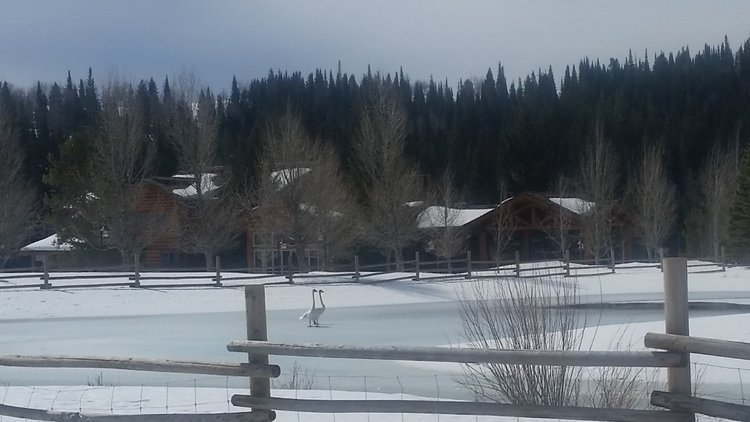
Since our previous post the snow at the rearing pond has melted away. The captive pair of Trumpeter Swans have been placed on the pond and the female is now incubating her nest, with the male in attendance. All is peaceful now, but a week ago things were much more unsettled. A pair of wild Trumpeter Swans that visited in late April kept returning to the pond and looked like they wanted to nest nearby. The presence of the captive birds may have convinced them that this pond is a good place to raise young.

Swans are very territorial and aggressive towards other pairs during the breeding season. Our captive swans are flightless and can’t hold their own against the wild birds. Because the wild swans were capable of injuring our birds, we had to take measures to protect them. The inch-wide tape that we’ve drawn across the pond was the solution. These lines are visible from the air and keep swans and geese from landing here. We’re keeping our fingers crossed that there will be no more excitement for the remainder of the breeding season.
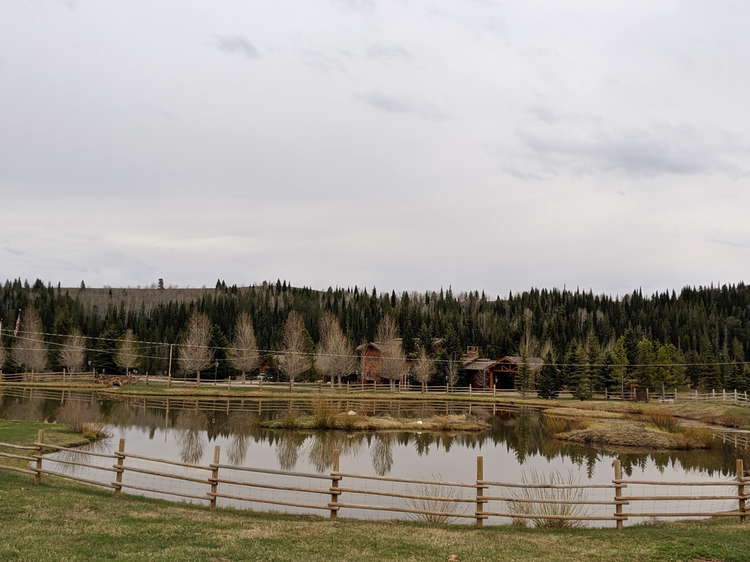
Tape barrier to protect captive swans

Photo: Charles Southwick

The Breeding Season Approaches

Trumpeter Swans arriving at breeding site

As the days grow longer, snow and ice begin to melt and Trumpeter Swans head from their wintering grounds to their breeding sites. Young pairs, usually three to four years old, spend their first year together scouting for unoccupied habitat where they can breed in future years. This is the most likely explanation for the pair of Trumpeter Swans that dropped in on Little Jackson Hole earlier this month.

They decided to check out our rearing pond, where we place a pair of swans each year as part of our captive breeding program. While this property is probably too busy for wild birds, it’s a testament to the success of the Swan Partnership’s approach to Trumpeter Swan conservation. This pair is most likely the result of the Wyoming Wetlands Society’s Upper Green River restoration project. As this population has grown, birds are expanding out beyond the Green River and into the Hoback River Basin.

We are looking to duplicate our Wyoming success in Idaho and Montana. The next few years will be very interesting.