Life Under Water - What is Living in the Hoback River

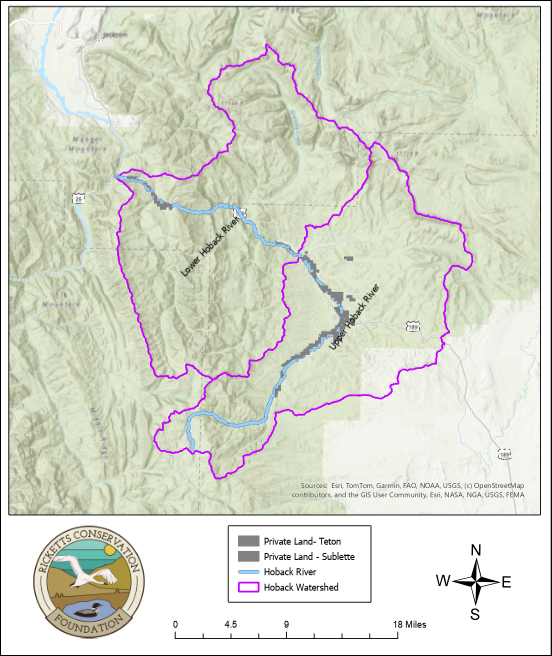
The Hoback River is one of four tributaries that flow into the Snake River before it reaches the Idaho border. Draining approximately 360,000 acres (Figure 1), the watershed includes National Forest lands and over a hundred private properties that lie along its 55-mile course. Through partnerships with local conservation districts, RCF is helping collect long-term water quality data intended to inform us if water quality starts to decline.
In 2026, RCF partnered with the Sublette County Conservation District (SCCD) to monitor water quality at several locations in the Upper Hoback Basin.  SCCD has collected various chemical and physical parameters in the Basin since 2001.  Each site is sampled approximately 4 times per year by SCCD.  Physical water properties measured include dissolved oxygen, pH, temperature, turbidity and conductivity. Among the chemical water properties measured are chloride, anion/cation balance, hydrocarbons, total dissolved solids, sulfate, and calcium.  Results from these tests tell us if the water is safe for drinking and its impact on aquatic life.

We also sample biological data.  Aquatic life flourishes underwater and the types of organisms that live there indicate how clean or how dirty the water is.  We collect these samples in the fall, at riffles where shallow, swift running water creates an oxygen-rich environment.  Staff go to each monitoring location and delineate a riffle.  Using a net to determine the area to sample, they scrub rocks and then send the specimens to a third-party laboratory for identification.  Over time, this robust dataset tells a story about water quality in the Hoback Basin.  Check out these videos produced by SCCD that show the procedures they use for physical and chemical parameters and biological sampling.
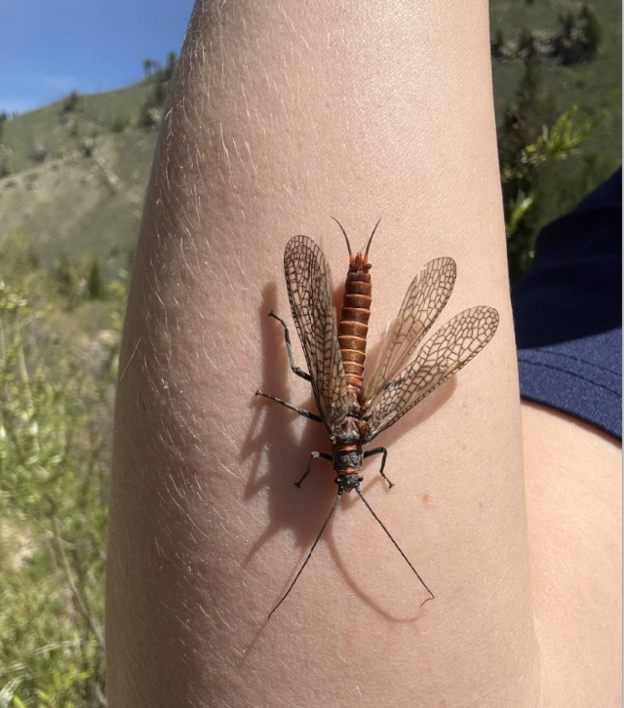
This year, we discovered a treasure trove of underwater life!  Early in the spring, we experienced the great Salmonfly (Pteronarcys californica) hatch (Figure 2).  These large orange stoneflies spend three to four years crawling among rocky river bottoms in cold, well oxygenated water before migrating to the banks to hatch.

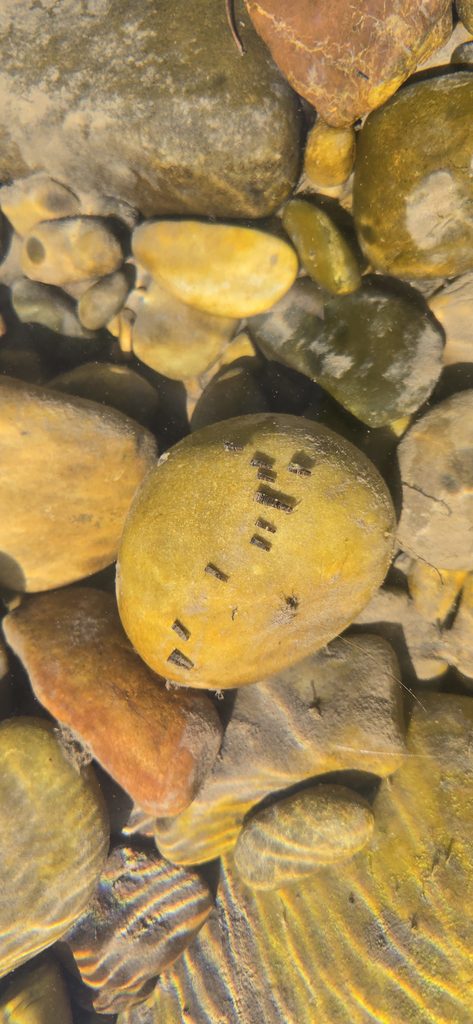
Caddisflies are another indicator of good water quality.  The aquatic larvae build protective cases (Figure 3) using silk to bind gravel, sand, twigs, and other debris.

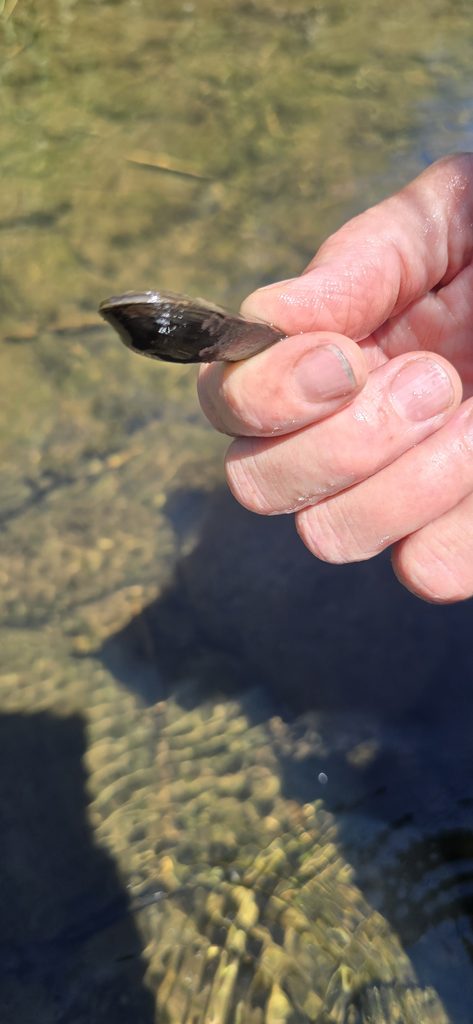
Lastly, we found the rare Western pearlshell mussel (Margaritifera falcata)at one of the monitoring sites (Figure 4).  Some of these mussels can live over 100 years!  Larval Western pearlshell mussels (formally known as glochidia) commute throughout water systems by attaching themselves to a host salmonid.  Once they detach from the host fish, mussels stay within a small area on the stream bottom, using their muscular “foot” to travel and bury themselves in the sediments and gravel at the bottom of the stream.  Mussels pump large amounts of water through their bodies as they filter the suspended particles of organic matter that they feed on. They therefore improve water quality and are also indicators of it.

Do you want to know more about what happens beneath the water in our Wyoming rivers and streams?  Check out this publication by the University of Wyoming.

RCF will continue working with partners to monitor the water quality of the Hoback Basin.  We are excited to share our findings.

Conservation Field Day

FOR IMMEDIATE RELEASE

May 28, 2026

Ricketts Conservation Foundation and Bondurant Art & Agriculture Market to Host Engaging Conservation Field Day in Bondurant

Conservation Field Day to celebrate conservation and stewardship of natural resources in the Hoback Basin

Bondurant, Wyo. – The Ricketts Conservation Foundation (RCF) and the Bondurant Art and Ag Market (BAAM) are partnering to connect conservation organizations with the community through a Conservation Field Day in the Hoback Basin.

The Conservation Field Day will be hosted in conjunction with BAAM at the Branding Iron Café in Bondurant, Wyoming, on June 13, 2026, from 10 am to 2 pm. The community event will celebrate conservation and stewardship of natural resources in the Hoback Basin through topical discussions and conservation project tours.

Part of the Yellowstone Ecosystem, Hoback Basin hosts diverse wildlife, migratory species, and the headwaters of the Hoback River. Over the past decade, the basin has faced impacts from fire, drought, and expanded development, which impacts the overall function of the natural systems. Landowners and community members play a vital role in easing pressure on this ecosystem, but often lack the resources needed to help steward the surrounding environment.

“We live in an extraordinary landscape and to ensure its long-term viability, we all must do our best to steward every acre.  Conservation Field Day is intended to provide landowners with tools and programs they can utilize, helping everyone achieve optimum natural resource stewardship on every acre,” says Shari Meeks, Project Manager of RCF.

A series of brief informational presentations will cover topics such as Sublette County Weed & Pest programs, bees, gardens, native plants, the history of Bondurant, forest planning, and grant opportunities. These talks will be followed by an opportunity to visit ongoing conservation projects, including the Hoback River Restoration project.

Participating organizations include Sublette County Weed & Pest, Green River Valley Program of the Jackson Hole Land Trust, Friends of the Bridger-Teton, Wyoming Game and Fish Department, Trout Unlimited, Greater Yellowstone Coalition, Wyoming Outdoor Council, Jackson Hole Wildlife Foundation, Teton Conservation District, Museum of the Mountain Man, Wyoming Wilderness Association, Snake River Fund, and Sage and Snow Garden Club.

About Bondurant Art & Ag Market: Established in 2023, the Bondurant Art and Ag Market (BAAM) was created as an opportunity to gather the community, providing Bondurant residents with an opportunity to showcase the many talented artists in the area.  While it initially focused on art and agricultural products – such as locally grown beef, lamb and dairy – it has since expanded to include fruits, vegetables and baked goods.  The market continues to grow and attract a wide variety of vendors.

About Ricketts Conservation Foundation: The Ricketts Conservation Foundation exists to study, protect and enhance populations of at-risk species through partnering with non-government and government organizations, educational institutions and public agencies to understand the natural processes and human management decisions affecting the Yellowstone Ecosystem. 

###

For more information or to schedule an interview with an event representative, please contact Shari Meeks (RCF) at [email protected]. 

Snake River Headwaters Symposium

Join the Snake River Headwaters Watershed Group on April 17 for the Snake River Headwaters Symposium. This full-day event will bring together scientists, agencies, nonprofits, businesses, water users, Tribal representatives, guides and outfitters, and community members dedicated to the long-term health and resilience of the watershed.

As SRHWG’s flagship event, the Symposium creates space for learning, dialogue, and connection across sectors. Through engaging presentations, panels, workshops, and networking opportunities, participants will explore critical topics including watershed management, habitat restoration, water quality, recreation, and the cultural and economic value of the Snake River.

Featuring a keynote by acclaimed author Kevin Fedarko (The Emerald Mile), whose storytelling and lessons from the Colorado River will spark conversation about what the Snake can learn from other iconic watersheds. 

Together, participants will build understanding, strengthen relationships, and inspire collaborative, science-based action to steward this vital ecosystem into the future.

More information at www.snakeriverheadwaters.org/symposium