Join the Team as an Experienced Bird Bander!

Applications Open Until Filled

About Us: Founded on the principle that conservation is everyone’s responsibility, The Ricketts Conservation Foundation (RCF) works with private and public partners to study, protect, and enhance the populations of at-risk species within the Greater Yellowstone Ecosystem, while working to understand how our lands can be sustainably managed.

Job Summary: We are hiring an experienced bird bander to work on a long-term project assessing songbird response to wildfires and Aspen regeneration on Monument Ridge, near the town of Bondurant, Wyoming. Specifically, we are looking for someone highly knowledgeable of songbird mist netting and banding, aging and sexing techniques, an ability to identify western birds by sight and sound, physically capable of hiking 10+ miles daily in rugged, mountainous areas above 8000 feet elevation, and an enthusiasm to assist as needed with a variety of research projects. Familiarity with the IMBCR point count protocol is preferred but not required, as the selected candidate will attend an IMBCR training week run by Bird Conservancy of the Rockies in mid-May before arriving in Bondurant. Interested applicants with suitable experience may also extend the position into the fall to help with our songbird and owl migration stations.

The Experienced Bander will work with the foundation’s Lead Bander to help run our nine (9) MAPS banding sites in the Bridger-Teton National Forest. The selected candidate will be responsible for operating several low to mid-volume MAPS stations with one or two mist net assistants (set up and taking down nets, extracting, banding, aging, and sexing birds as well as recording and entering data), and work with the lead bander at our high-volume sites. They will also help monitor passerine nest boxes, check cameras traps, conduct vegetation surveys, contribute social media posts, and possibly conduct IMBCR bird surveys. The Experienced Bander will also assist the Lead Bander with project management and crew supervision.

Summer Responsibilities (May - August):
MAPS songbird mist netting and banding (70%)
IMBCR point counts (5%)
Vegetation Surveys (5%)
Camera trap monitoring and maintenance (5%)
Passerine nest box monitoring (5%)
Office Tasks (Data entry, social media posts, Net repair, Gear inventory and maintenance) (10%)

Fall Responsibilities (September – November, tentative for 1 or 2 technicians):
Owl migration mist netting and banding (50%)
Songbird migration mist netting and banding (40%)
Camera trap monitoring and maintenance (5%)
Yellowstone Clark’s Nutcracker Surveys (5%)

Hours/Schedule: This is a full-time, seasonal position with a somewhat flexible start and end date. The work schedule is typically 10 days on and 4 days off, but weather and project requirements will ultimately determine the schedule. Overtime (1.5x hourly rate) will be provided for hours beyond 40 per week. The experienced bander typically works 5-10 hours of OT each week.

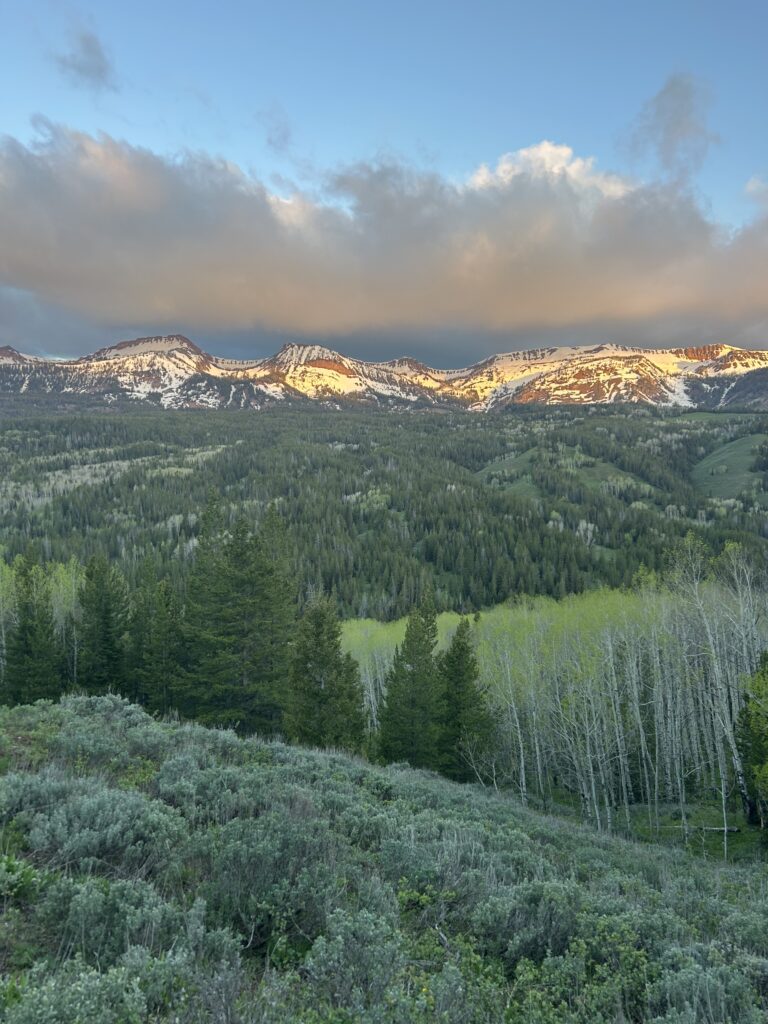
Field Conditions: The study area lies at 7,000’ - 10,000’ elevation, so mornings can be cold and frosty, even in the middle of the summer. Habitat types include aspen woodlands, mixed conifer, sagebrush steppe. Grizzly bear encounters are possible, but very infrequent. Shared housing and transportation for work is provided. Our MAPS banding stations are located on rugged areas of National Forest land, and our banders need to be able to stay sure-footed while carrying birds up and down steep slopes to get between net lanes and the banding table. Occasional use of personal vehicles for work occurs but is not required. Fuel expenses are reimbursed. Technicians will need their own camping equipment and field gear as well as secure their own transportation to and from Bondurant, WY (travel costs up to $400 will be reimbursed). Bondurant is a remote town with a population of less than 100 year-round residents. The closest amenities are in Jackson and Pinedale, each a 45-minute drive from town. Recreational opportunities in the surrounding area are truly limitless, with world class fly fishing, backpacking, rafting, climbing and two national parks.

Qualifications: Substantial songbird mist netting and banding experience required (processed a minimum of 500 adult passerines). Must possess knowledge of aging and sexing techniques and qualify as a sub-permittee on the banding permit.

Excellent hearing, sight, familiarity with identifying western birds, and note taking and organizational skills are required. Familiarity with Rocky Mountain tree and shrub species is helpful but not essential. Familiarity with sexing and aging using the Pyle Guide, and how to use both HP and WRP aging systems, is highly desired. Some previous experience maintaining camera traps, monitoring nest boxes, and driving large 4WD and manual transmission vehicles is also a plus.

Applicants should have earned a degree in wildlife biology, related discipline or be working towards completing a degree. A valid driver's license is required. Applicants should possess a strong work ethic, be a quick learner, have good navigational skills, be a team player, and be willing to share living spaces with coworkers. Ideally, candidates have some experience backpacking with camping and survey equipment into remote areas and knowledge of bear avoidance protocols. The bander must be in excellent physical condition, able to lift 50 pounds, hike up to 15 miles off trail at high altitude in steep terrain, sometimes with large areas of deadfall, tolerate early mornings, long hours, adverse weather, and be comfortable not using mosquito repellents while banding (DEET and handling birds does not mix).

Duration and Salary:
May 12 (tentative) to early or mid-August with possibility of extension to mid-November
$21/hour (40 hours a week plus some overtime)
Up to $400 reimbursement for moving expenses (i.e. gas, lodging) both to and from Bondurant.

***Free housing is provided in a beautiful mountain valley, adjacent to working ranches with bison and horses. ***

To apply: In a single PDF, please send a cover letter and resume detailing how your experience and interests make you a suitable candidate as well as three references. Specify your desired start and end dates and whether you are interested in continuing through the fall season. Applicants should include a banding resume detailing locations where experience was obtained as well as rough totals of birds extracted and birds processed. Please send all materials to Josh Lefever at [email protected]. Applications will be accepted until January 31st, 2026; prior to the closing date, suitable applicants may be asked to interview, and highly qualified candidates may be offered a position early.

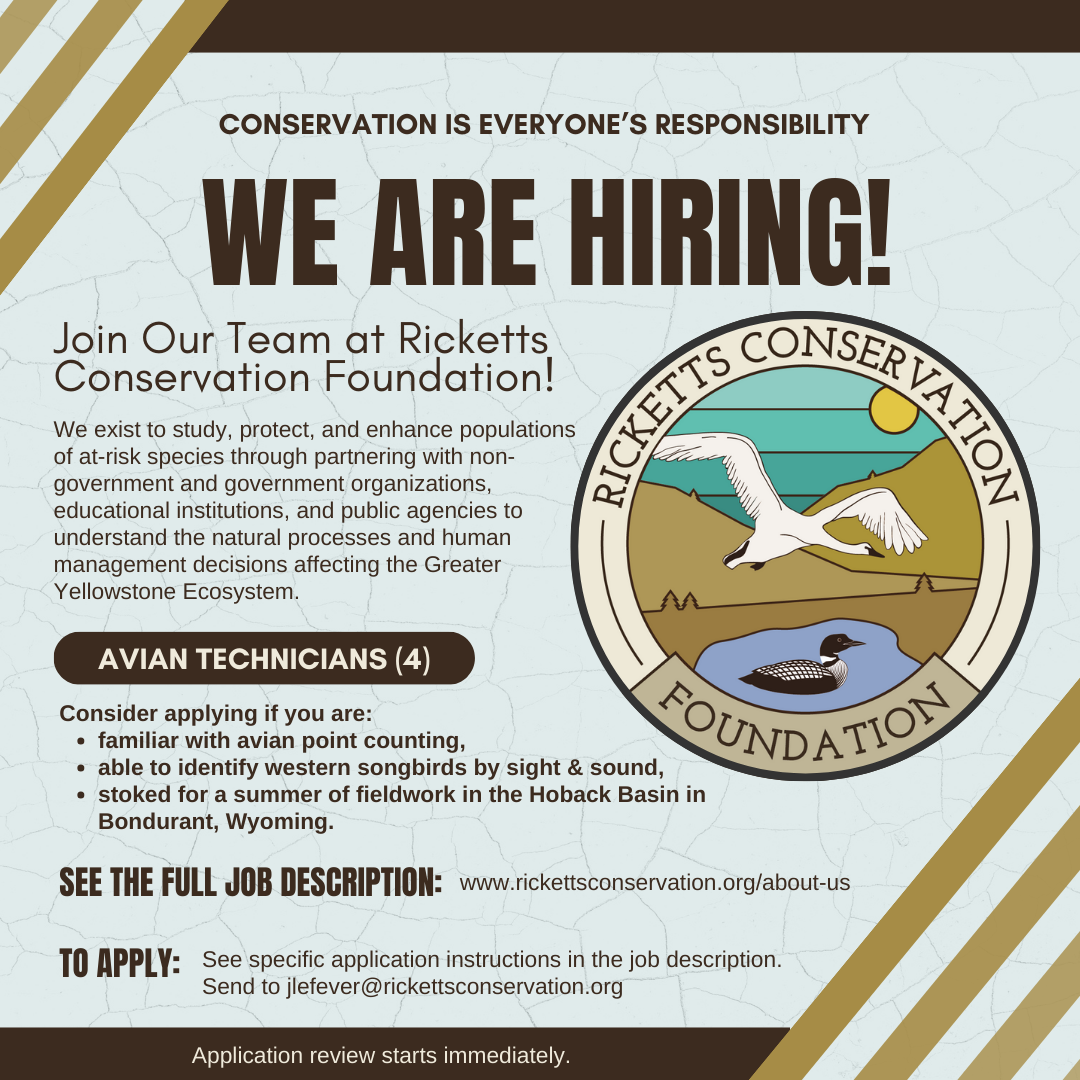
Join the Team as an Avian Technician!

Applications Open Until Filled

About Us: Founded on the principle that conservation is everyone’s responsibility, The Ricketts Conservation Foundation (RCF) works with private and public partners to study, protect, and enhance the populations of at-risk species within the Greater Yellowstone Ecosystem, while working to understand how our lands can be sustainably managed.

Job Summary: We are hiring four avian technicians to work on a long-term project assessing songbird response to wildfires and aspen regeneration on Monument Ridge, near the town of Bondurant, Wyoming. Specifically, we are looking for candidates with previous avian point counting experience, an ability to identify western songbirds by sight and sound, knowledgeable with songbird mist netting and banding, physically capable of hiking 10+ miles daily in rugged, mountainous areas above 8000 feet elevation, and an enthusiasm to assist as needed with a variety of research projects. Familiarity with the IMBCR point count protocol is preferred but not required, as all technicians are required to attend an IMBCR training week run by Bird Conservancy of the Rockies in mid-May before arriving in Bondurant. We may retain one or two technicians to assist with our fall bird banding operations.

Technician responsibilities include assisting at our nine (9) MAPS stations (setting up and taking down nets, extracting birds, recording, and entering field data, conducting IMBCR bird surveys, monitoring passerine nest boxes, checking cameras traps, conducting vegetation surveys, and possibly assisting with Clark’s Nutcracker, Pinyon Jay, and Common Loon research projects in the Yellowstone Ecosystem. Technicians may be asked to contribute social media posts that describe their work for RCF.

Summer Responsibilities (May - August):
MAPS songbird mist netting and banding (45%)
IMBCR point counts (30%)
Vegetation Surveys (9%)
Camera trap monitoring and maintenance (5%)
Passerine nest box monitoring (5%)
Office Tasks (Data entry, social media posts) (5%)
Assisting with Common Loon and/or Clark’s Nutcracker Projects (1%)

Fall Responsibilities (September – November, tentative for 1 or 2 technicians):
Owl migration mist netting and banding (60%)
Songbird migration mist netting and banding (25%)
Camera trap monitoring and maintenance (5%)
Yellowstone Clark’s Nutcracker Surveys (5%)
Office Tasks (Data entry, social media posts) (5%)

Hours/Schedule: These are full-time, seasonal positions with somewhat flexible start and end dates. The work schedule is typically 10 days on and 4 days off, but weather and project requirements will ultimately determine the schedule. Overtime (1.5x hourly rate) will be provided for hours beyond 40 per week. Technicians typically work 0-5 hours of OT each week.

Field Conditions: The study area lies at 7,000’ - 10,000’ elevation, so mornings can be cold and frosty, even in the middle of the summer. Habitat types include aspen woodlands, mixed conifer and sagebrush steppe. Grizzly bear encounters are possible, but very infrequent. Shared housing and transportation for work is provided. Occasional use of personal vehicles for work may occur but is not required. Fuel expenses are reimbursed. Technicians will need their own camping equipment and field gear as well as secure their own transportation to and from Bondurant, WY (travel costs up to $400 will be reimbursed). Bondurant is a remote town with a population of less than 100 year-round residents. The closest amenities are in Jackson and Pinedale, each a 45-minute drive from town. Recreational opportunities in the surrounding area are truly limitless, with world class fly fishing, backpacking, rafting, climbing and two national parks.

Qualifications: Excellent hearing, sight, and a willingness to learn to identify western birds by sight and sound are required. Familiarity with Rocky Mountain tree and shrub species is helpful but not essential. Previous experience extracting passerines from mist nets is a must (minimum 100 passerines extracted). Familiarity with sexing and aging using the Pyle Guide, and how to use both HP and WRP aging systems, is a plus. Some previous experience maintaining camera traps, monitoring nest boxes, and driving large 4WD and manual transmission vehicles is also highly desirable. For those interested in staying for the fall season, previous owl banding experience is beneficial.

Applicants should have earned a degree in wildlife biology, related discipline or be working towards completing a degree. A valid driver's license is required. Applicants should possess a strong work ethic, be a quick learner, have good navigational skills, be a team player, and be willing to share living spaces with coworkers. Experience backpacking with camping and survey equipment into remote areas and knowledge of bear avoidance protocols is desirable. Technicians must be in excellent physical condition, able to lift 50 pounds, hike up to 15 miles off trail at high altitude in steep terrain, sometimes with large areas of deadfall, tolerate early mornings, long hours, adverse weather, and be comfortable not using mosquito repellents while banding (DEET and handling birds does not mix).

Duration and Salary:
May 12 (tentative) to early or mid-August with possibility of extension to mid-November
$18/hour (40 hours a week with some overtime)
Up to $400 reimbursement for moving expenses (i.e. gas, lodging) both to and from Bondurant.

***Free housing is provided in a beautiful mountain valley, adjacent to working ranches with bison and horses. ***

To apply: Send a single document including a cover letter and resume detailing how your experience and interests make you a suitable candidate, as well as three references. Please specify your availability from mid-May to early August, and whether you are interested in joining our fall season. Highly qualified banding applicants should include a banding resume detailing locations where experience was obtained as well as rough totals of birds extracted, and birds processed. Please send all materials to Josh Lefever at [email protected]. Applications will be accepted until January 31st, 2026; prior to the closing date, suitable applicants may be asked to interview, and highly qualified candidates may be offered a position early.

2025 Summer Bird Banding Summary

Ricketts Conservation Foundation’s 2025 bird banding season ran from May 31st to August 8th. With the help of our fantastic crew of seasonal bird biologists, and a summer of beautiful weather, we had a fun and very successful season of catching and studying breeding songbirds.

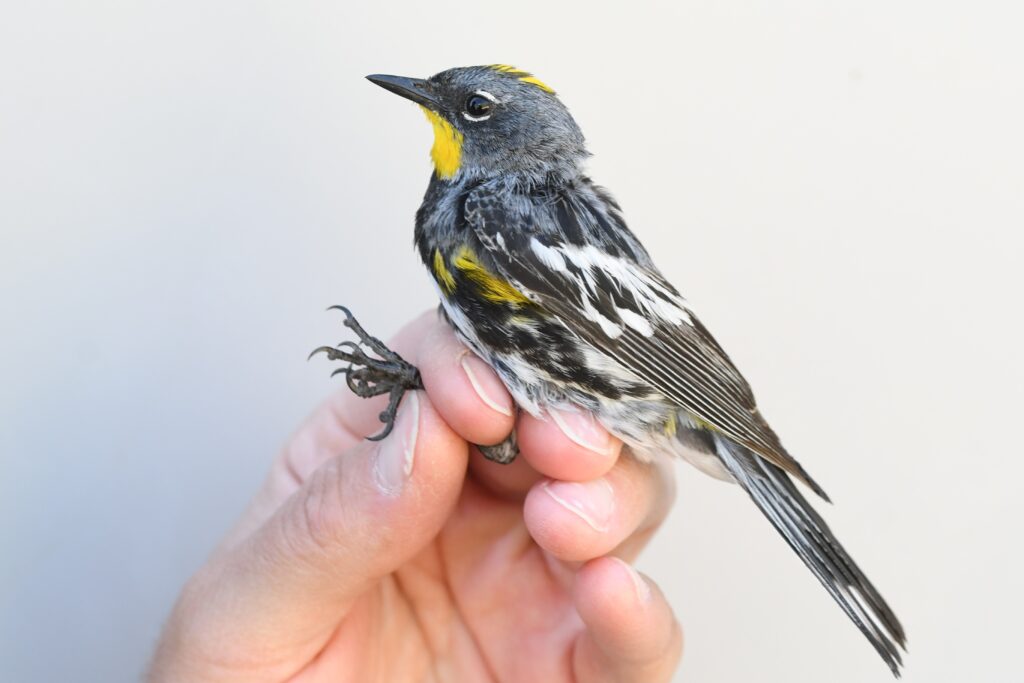
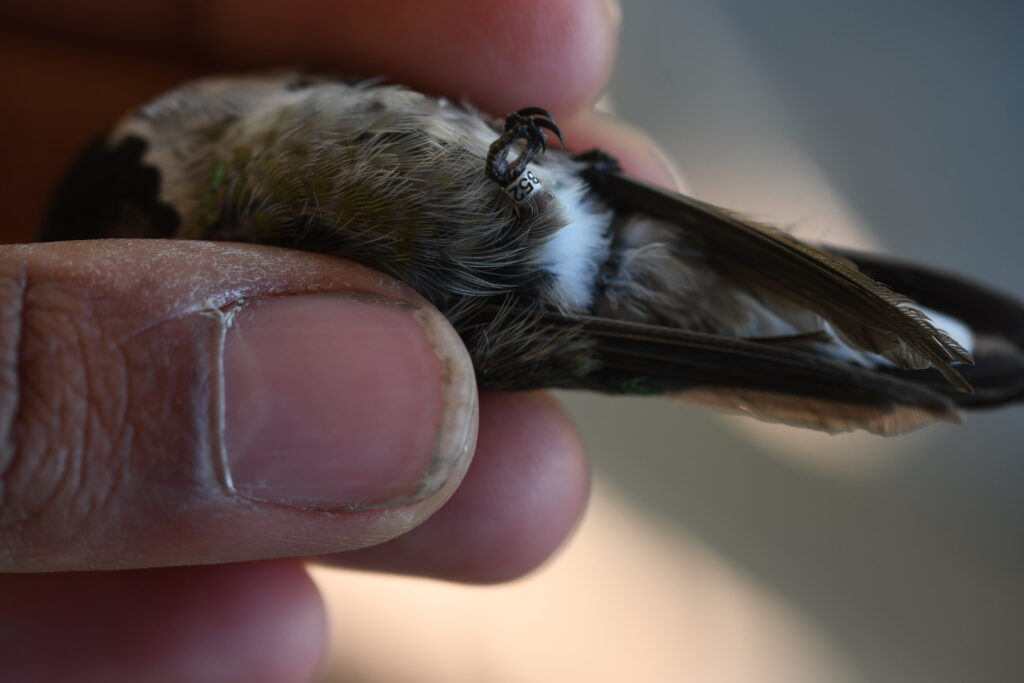
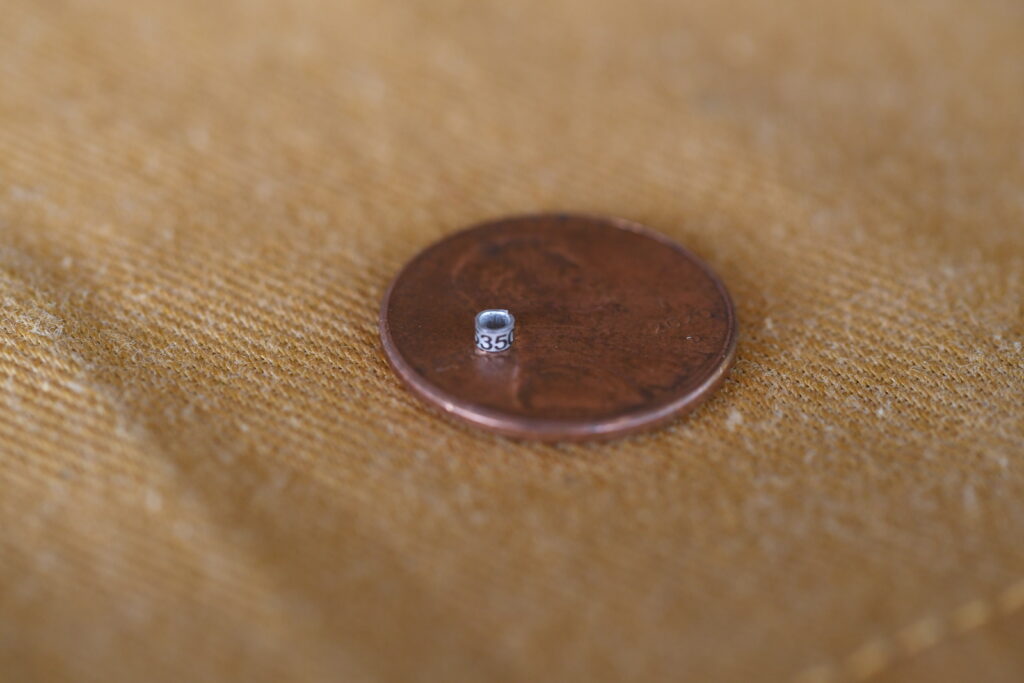
RCF biologists have been using bird banding to study avian breeding activity in different habitats around Monument Ridge since 2018. Following the MAPS protocol, RCF biologists capture a variety of small songbirds, take a series of measurements to access the bird’s health, and attach a small, lightweight metal ring to the bird’s leg with a unique 9-digit number.

In our first year, 3 stations were established to compare bird communities in areas affected by wildfire, areas scheduled for Forest Service prescribed thinning and controlled burning, and areas of old growth Aspen without any influence of fire. Our banding operation has grown over the years, and 2025 was our first year operating 9 banding stations- 3 for each type of area. We operate each station once every 10 days, for 6 hours starting just before sunrise; each site was operated 7 times over the course of the season.

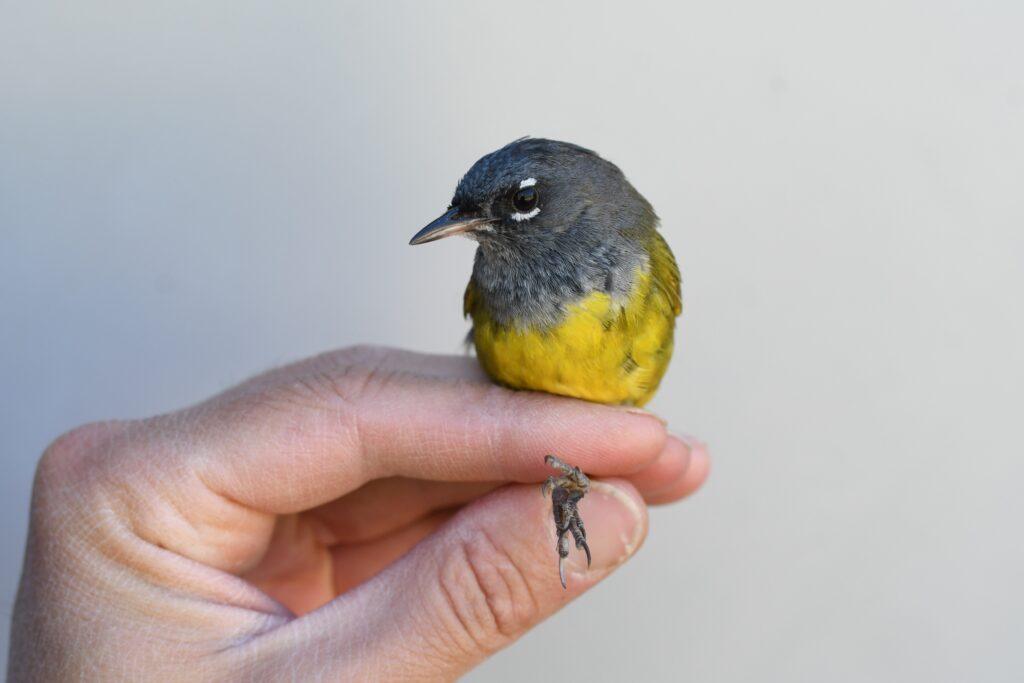
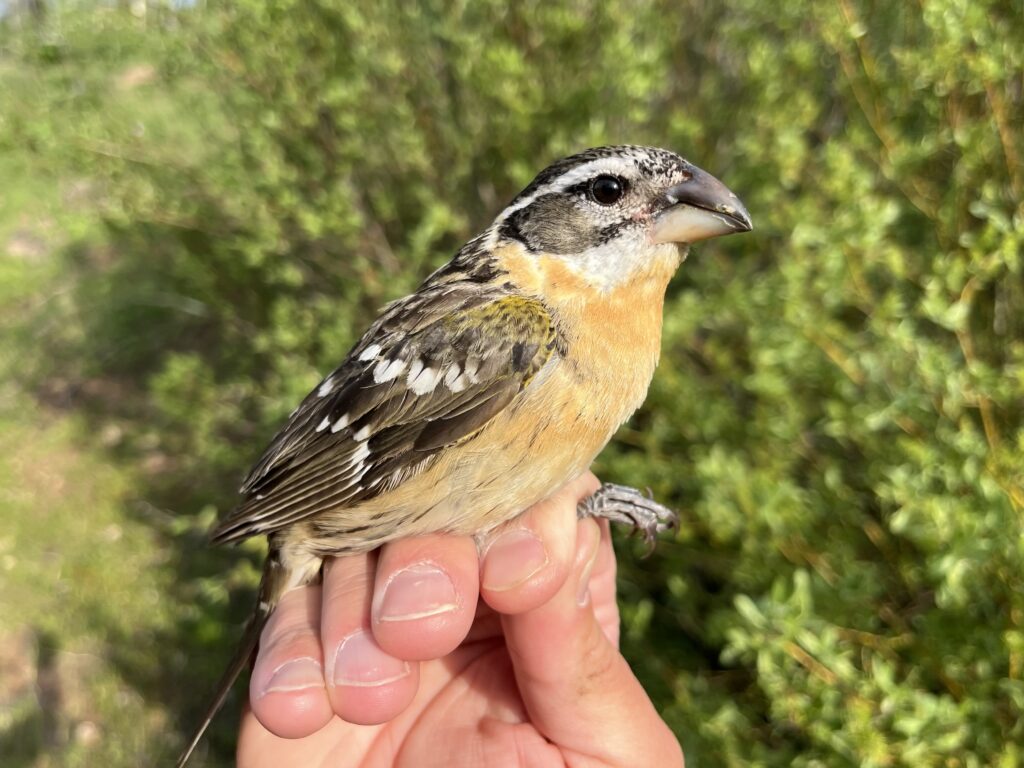
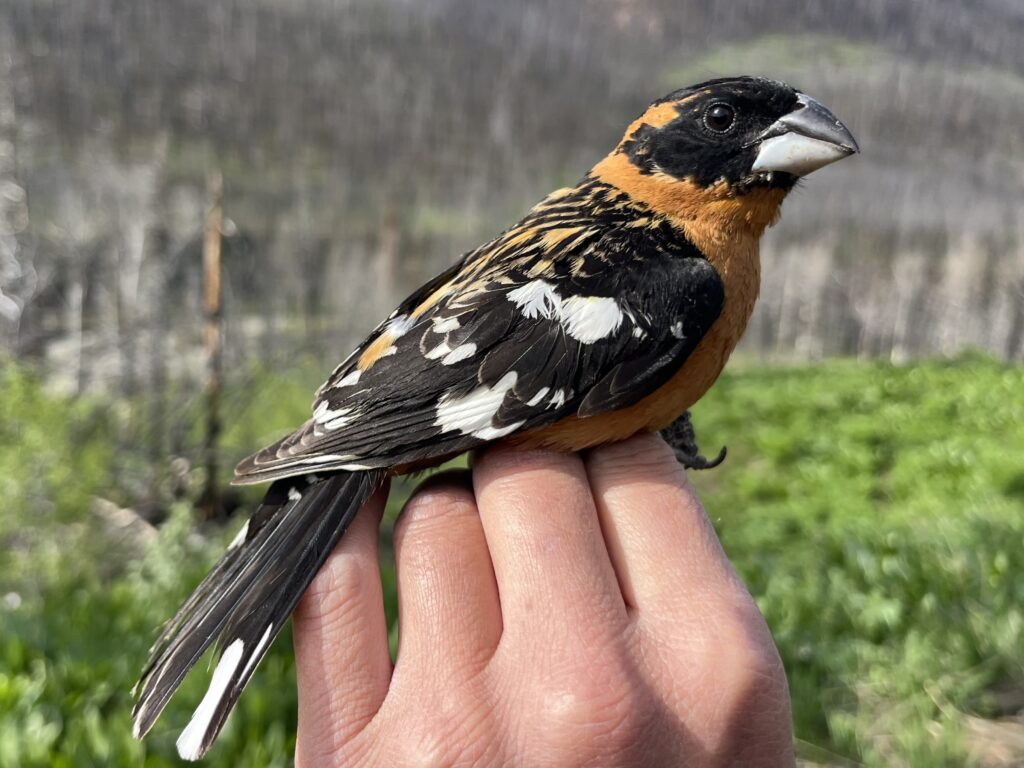
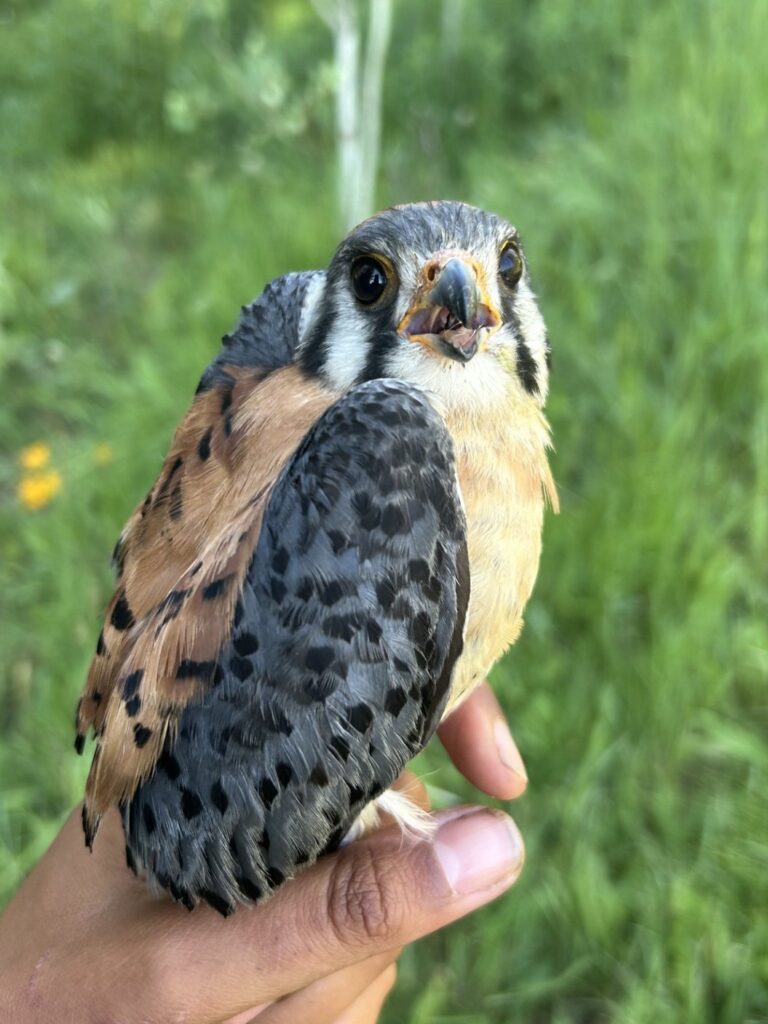
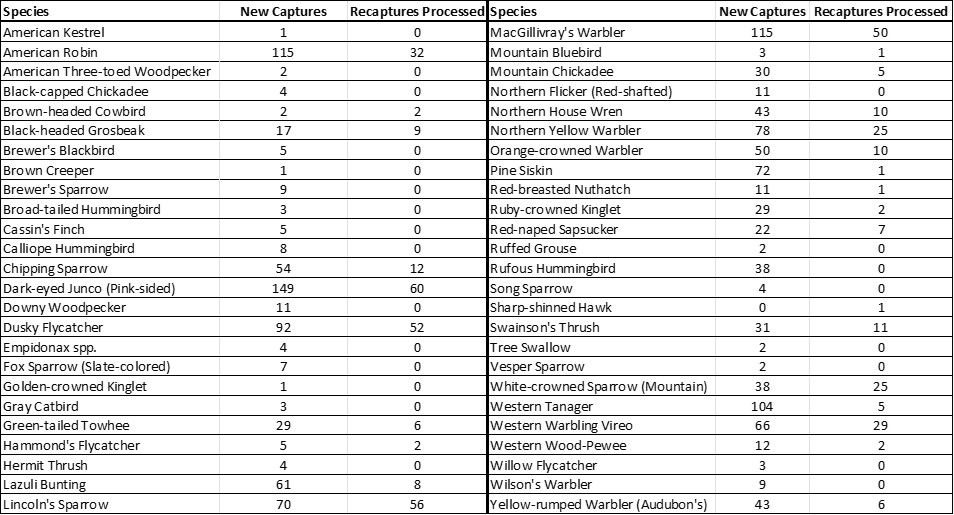
Collectively we caught 49 species of birds, banded 1,450 individuals, and processed 431 recaptures. Of our recaptures, 145 were banded in the previous year. All our recaptures are of individuals that were banded at one of our sites in the area; we have not yet ever captured a bird banded away from our sites at Monument Ridge. Our oldest recapture this summer was a female Brown-headed Cowbird, who was banded as an adult in 2020, and is at least 6 years old now. Our most common species banded were Dark-eyed Junco (148), American Robin (115), and MacGillivray’s Warbler (115). Above is a chart of all of our captures from this summer.

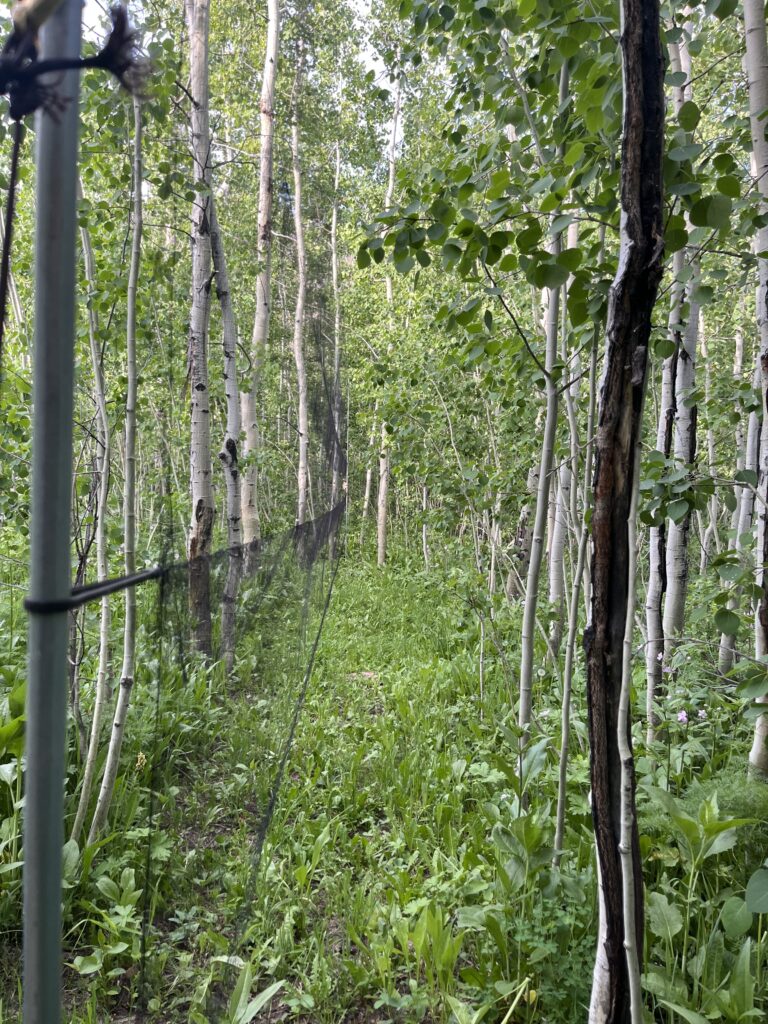
All the banding sites are comprised of 10 mist nets suitable for capturing small birds, and we see variation in species composition and abundance in different habitats. In our wildfire burned sites, we have young regenerating stands of Aspen trees, which serve as excellent habitat for songbirds. In 2025, we banded a total of 679 birds at our wildfire sites. Due to a lack of fire-induced Aspen regeneration at our other sites, we catch fewer birds there- 460 were banded at our treatment sites (which have been thinned by the Forest Service but not burned) and 311 were banded at our control sites. Looking back at our 3 most frequently banded species of birds, we can see differences in their abundance at different sites. For our most common species, Dark-eyed Junco, only 12% were banded at the wildfire burn sites, and 88% were banded at the un-burned sites. However, for MacGillivray’s Warblers 57% were banded at our 3 wildfire sites, and the other 43% were spread out across the 6 un-burned sites. And then there’s American Robins, which were caught by fairly even numbers across all 9 sites.

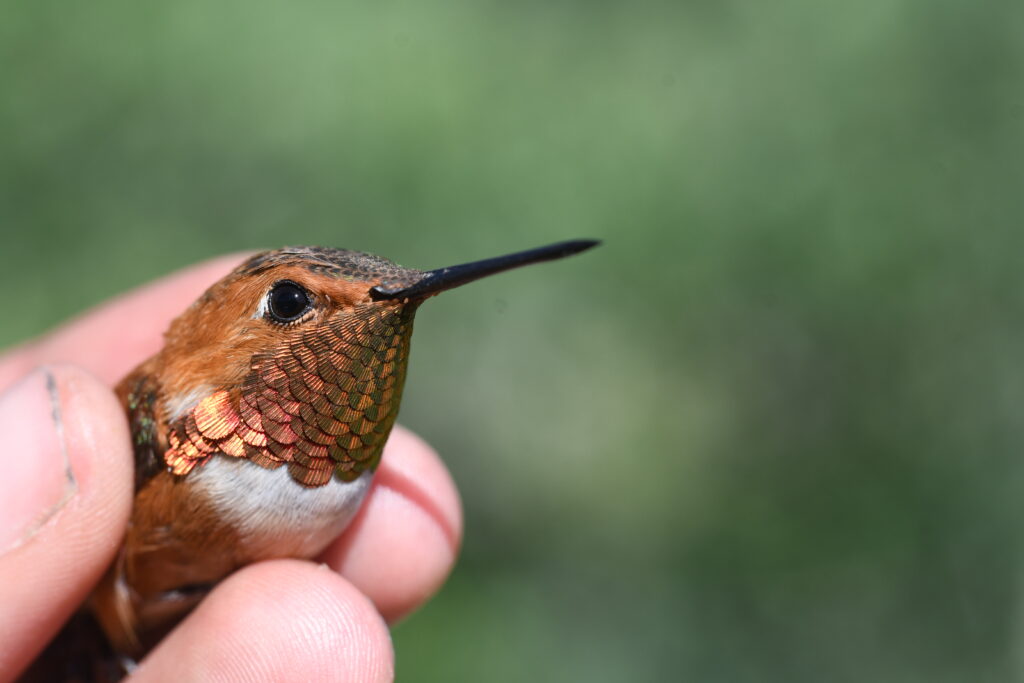
This summer, RCF also had a hummingbird bander visit our sites to provide specialized training to our lead and experienced banders. Because of their very small size, hummingbirds require a separate permit to be allowed to band them. By training our banders to tag the hummingbirds captured at our sites, we plan to begin more closely studying how migrating hummingbirds are using the regenerating Aspen habitat in burned environments.

2025 was a historic year for RCF’s banding operation, and it would not have been possible without all the hard work of our seasonal banding crew- Amaya Bechler, Alan Moss, Wyatt Westerkamp, Aiden Gifford, and Cheyenne Esposito. Without their help and dedication, our terrific season would not have been possible! With the continued support of Ricketts Conservation Foundation, we look forward to continuing to use bird banding to study songbirds in the GYE and help inform forest management decisions to best conserve the beautiful diversity of migratory birds in our region.