2025 Fall Bird Banding Summary
Ricketts Conservation Foundation’s 2025 fall bird banding season began on August 25th at our songbird migration station. Unlike over the summer when we catch songbirds using ten nets at nine rotating locations, our fall station is comprised of fifteen nets that are run every day at the same location. In autumn, disturbing nesting birds is no longer a concern, and instead our aim is to discover how migrating birds are using a select patch of stop-over habitat. For our fall banding efforts, a location on Jackson Fork Ranch along the Hoback River is utilized. This patch is comprised of riparian habitat with Willows and Cottonwood trees as well as tall Spruces and some Pines. The diverse flora and fresh water at this spot make it an appealing location for migrating birds to stop to rest and refuel along their journey south for the winter.
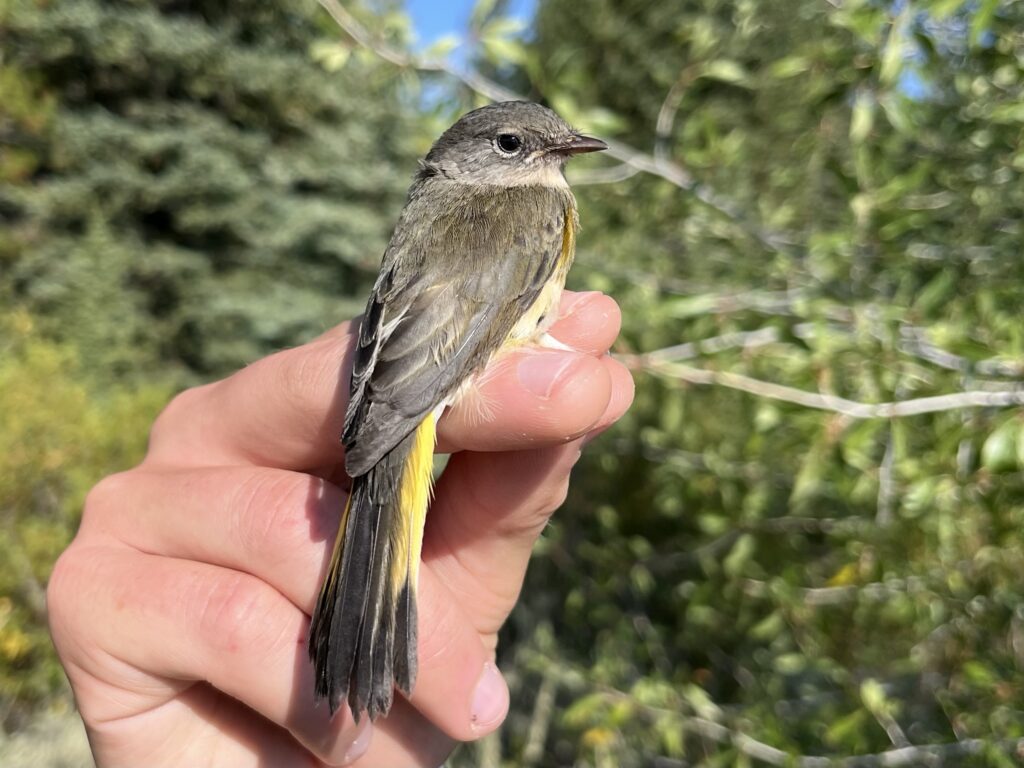
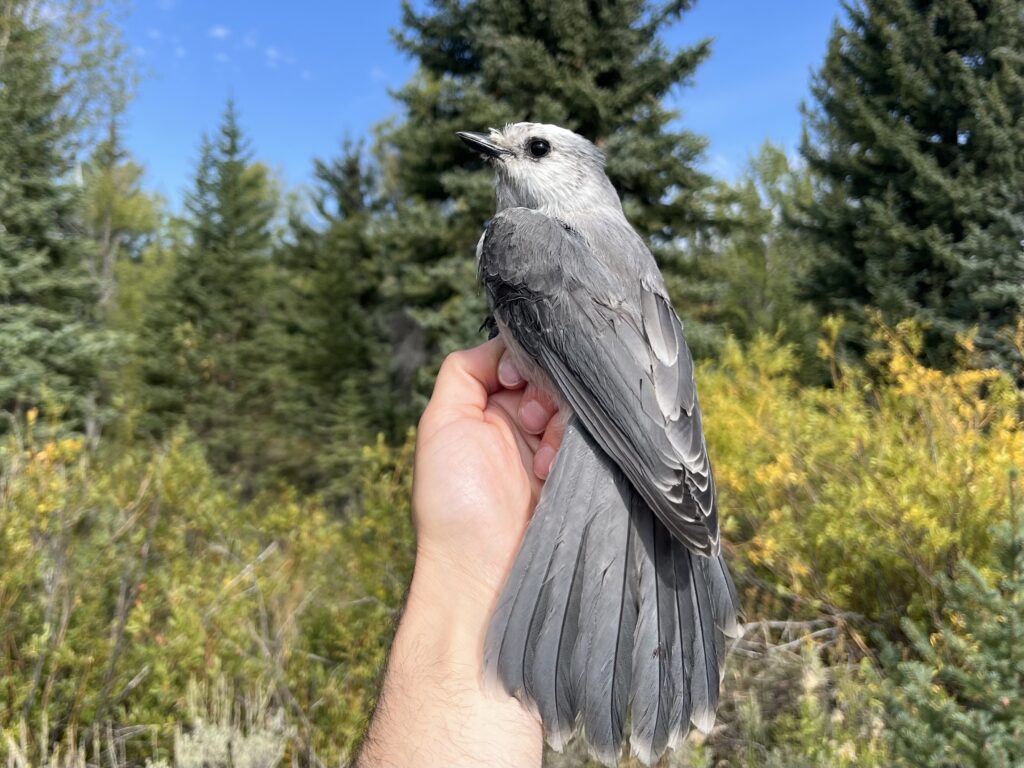
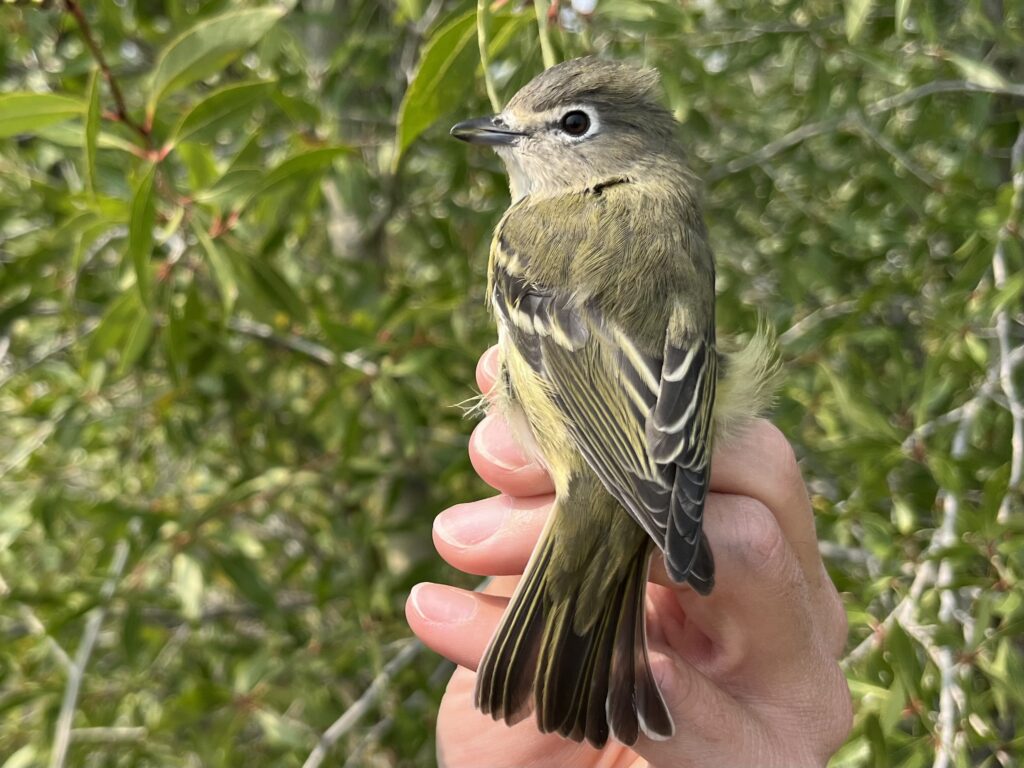
Fall songbird migration in western Wyoming is a fairly short phenomenon, with the bulk of the small migratory bird species moving through the region during the month of September. Due to some bad weather in late September and early October, our final morning of songbird banding was September 27th. Despite ending a few days earlier than we otherwise would have, it was an excellent season. The songbird crew banded 739 new birds and had 74 unique recaptures, comprised of 44 different species (Figure 1). Our 2025 total of 813 captures was a new record high, up from 694 in 2024 and 515 in 2023. Our most abundant bird caught in fall continues to be Wilson’s Warbler (113), but we also had a significant increase of Dark-eyed Juncos. In 2025 we banded 109 Juncos, compared to only 16 in 2024. Our 2025 fall season also had a few exciting first-time species captured- American Redstart, Clay-colored Sparrow, and Townsend’s Warbler are all uncommon migrants in western Wyoming. The Redstart and Sparrow species had not been previously documented in the Hoback basin, and this was only the 3rd fall record of Townsend’s Warbler in the area. These species are not known to regularly breed in our region and the individuals we caught this fall were likely migrating from breeding grounds in Montana, Idaho, or Canada to wintering grounds in Mexico.
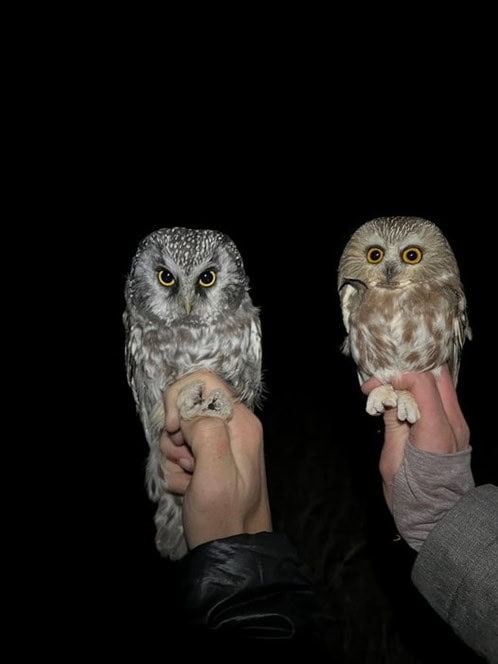
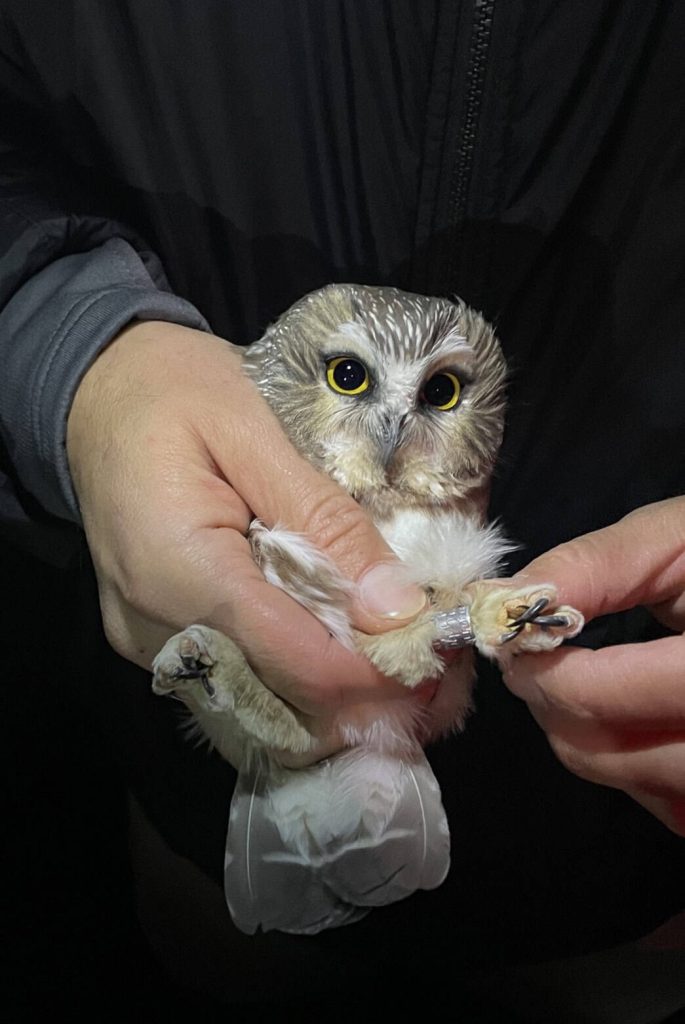
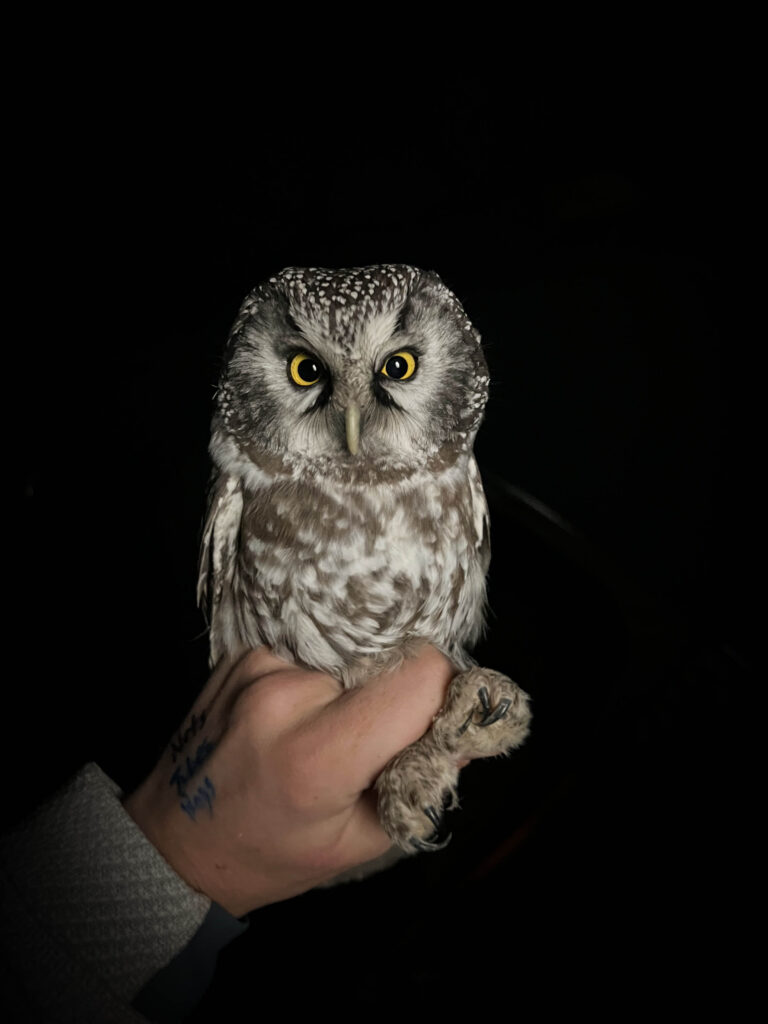
On the evening of September 1st, we began our target banding effort for Northern Saw-whet Owls. Saw-whets are a small species of migratory owl that RCF biologists began to study in 2021. Since 2023, we have been conducting songbird banding in the mornings and Saw-whet Owl banding at night at the same location on Jackson Fork Ranch. Several miles up the river from the songbird and Saw-whet Owl banding station, we established a second Owl banding site in 2024, specifically to catch Boreal Owls. Boreal Owls are larger than Saw-whets but still very small compared to other familiar owl species like Great-horned Owl. Boreal Owls are considered a nomadic species but are under-studied in North America. Through our banding efforts, we hope to better understand their winter movements and juvenile dispersal. Both Boreal and Saw-whet Owls breed in high elevation forests of the Yellowstone Ecosystem, and are well insulated for cold weather with lots of body feathers, particularly the Boreals. While most Saw-whets migrate out of the area by the end of October, many Boreals are likely to spend all winter in the region.
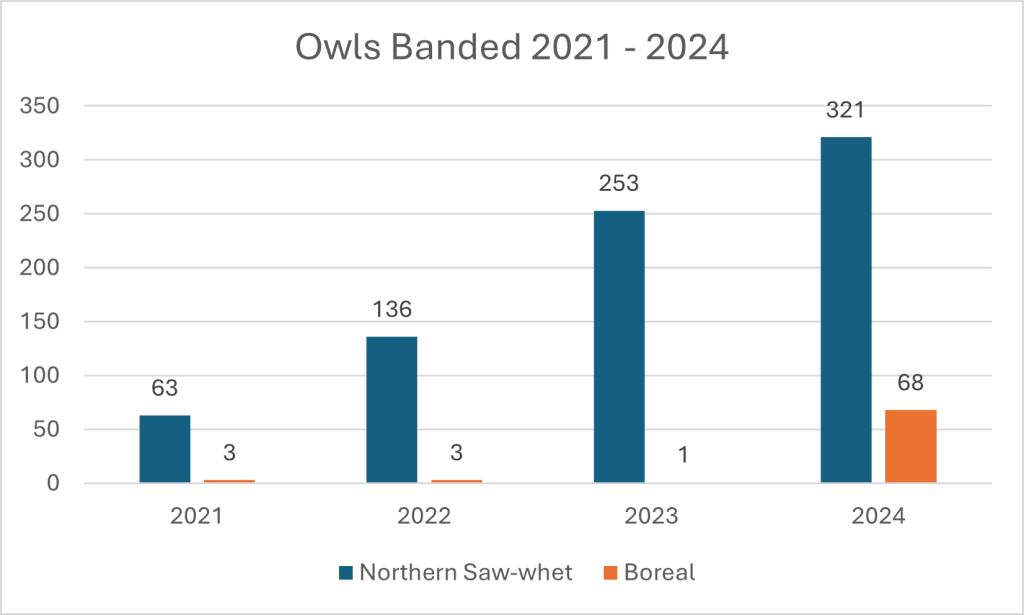
Our 2025 Northern Saw-whet Owl season ran until October 31st, and over the 2-month capture period we banded 213 new Saw-whets. While catching over 200 of these birds is still a very good season, it was fewer owls than the past 2 years- we banded 320 in 2024 and 253 in 2023. Saw-whet Owls are known to sometimes have large year-to-year fluctuations in local population size, likely tied to small mammal populations and juvenile survival. Catching over 300 last fall was exceptional, so having our number decrease this year was not a big surprise.
Since Boreal Owls can overwinter in our area and have unpredictable nomadic movements, we continue to try catching them into November. This year our final night of Boreal Owl banding was November 22nd. In slightly over 2 months of effort we banded 23 Boreals Owls. This was a big drop off from last year’s total of 68. Boreal Owl populations likely experience yearly fluctuations similar to the Saw-whet Owls, but we are still learning about their population size and seasonal occurrence in our area. Given the overall perceived scarcity of Boreals, catching 23 this year was still very valuable, and we hope to continue to gain a better understanding of their population with on-going fall banding efforts.
2025 was another successful year for RCF’s fall migration banding operation and it would not have been possible without all the hard work of our seasonal banding crew- Noah Price, Olivia Fortuna, Wyatt Westerkamp, and Aiden Gifford. Without their passion and dedication, this banding season would not have been possible! Below is a chart of all our captures from this past fall. With the continued support of Ricketts Conservation Foundation and Jackson Fork Ranch, we look forward to continuing to use bird banding to study migratory songbirds and owls in the Hoback Basin.