Conservation Partners Launch Yellowstone Ecosystem Virtual Fence Collaborative
FOR IMMEDIATE RELEASE

April 22, 2026

Ricketts Conservation Foundation and PERC are investing $600,000 to deploy transformative technology across one of North America's most iconic ecosystems

Bondurant, Wyo. – Two leading conservation organizations are joining forces to accelerate one of the most promising innovations in modern land stewardship. The Ricketts Conservation Foundation (RCF) and the Property and Environment Research Center (PERC) today announced the $600,000 Yellowstone Ecosystem Virtual Fence Collaborative, a bold effort to deploy GPS-collar livestock management technology across working ranches throughout the Yellowstone Ecosystem.

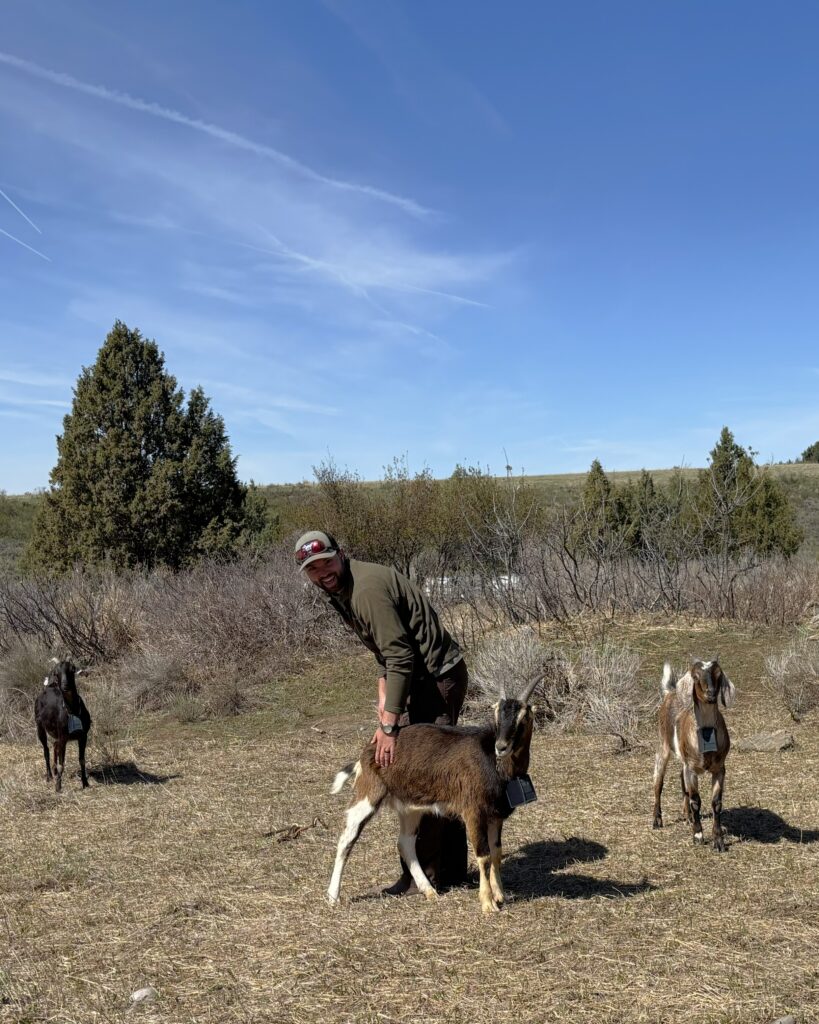
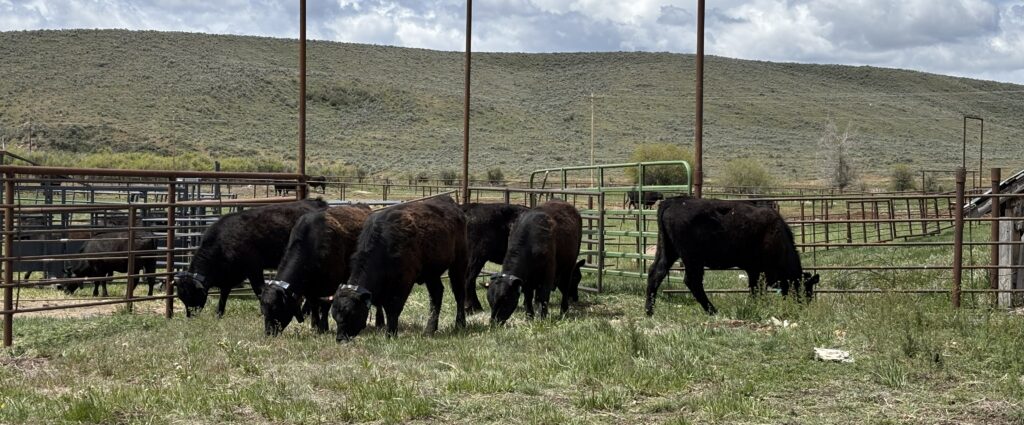
Virtual fencing is an emerging technology that replaces miles of traditional fencing, commonly barbed wire, with GPS-enabled collars that guide livestock using audio and mild physical stimulus cues. Managed from a smartphone or laptop, ranchers can create and adjust grazing boundaries almost instantaneously, improving flexibility and adaptability, and reducing infrastructure costs. The technology allows ranchers to remove physical barriers from the landscape, helping wildlife migration. With it, ranchers can also keep cattle out of ecologically sensitive areas and producers can respond quickly to livestock losses, reducing conflict while supporting working ranches.

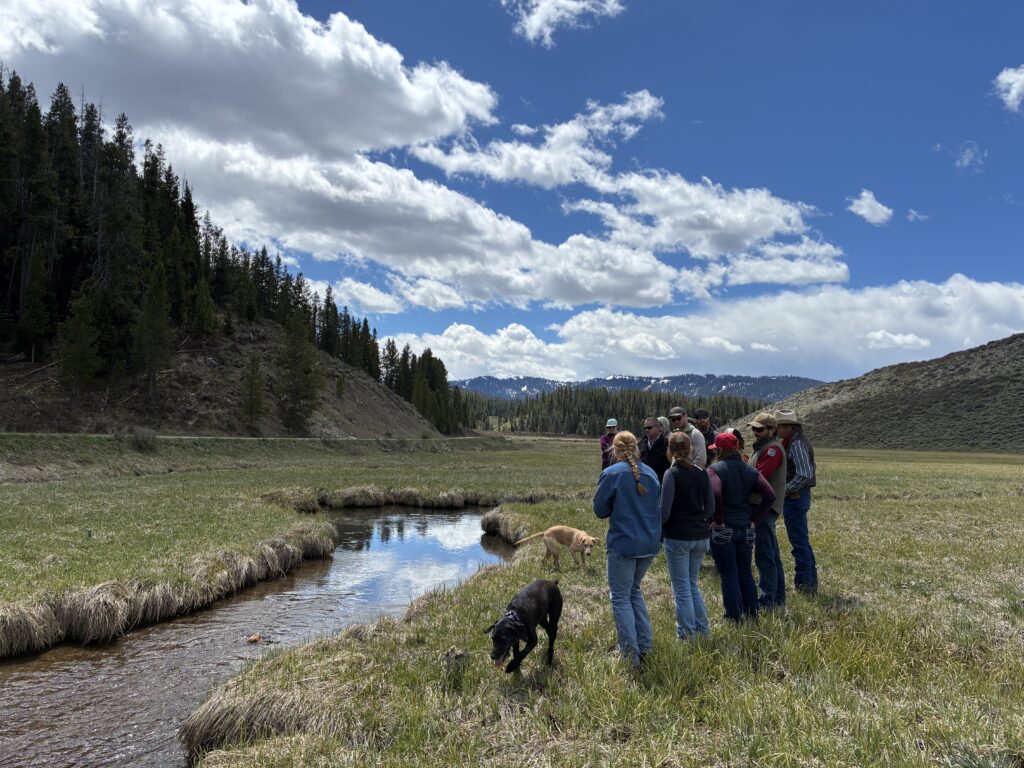
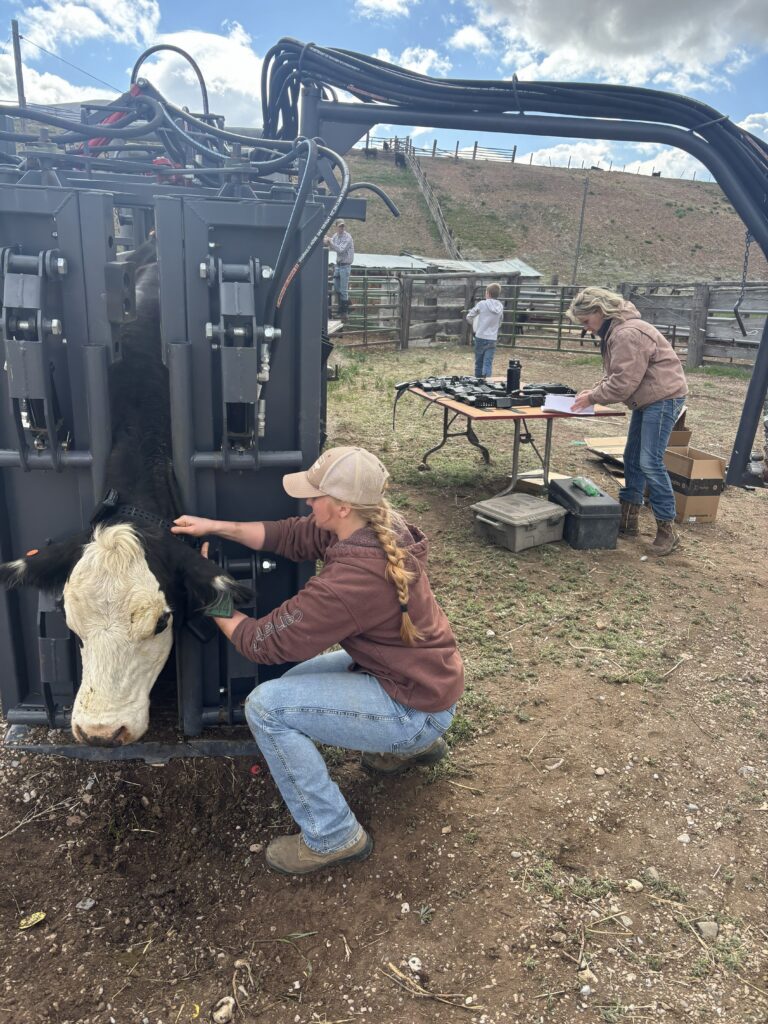
Located amidst one of the largest and most intact ecosystems in North America, the new initiative will support eight ranches that collectively span more than 366,000 acres with over 5,300 head of cattle across Wyoming and Idaho.

"The Yellowstone region is home to remarkable wildlife and working lands that support both local communities and global biodiversity," said Shari Meeks, project manager with the Ricketts Conservation Foundation. "Partnering with livestock producers who are willing to try innovative approaches like virtual fencing is a practical way to advance conservation while sustaining the landscapes that make this region extraordinary."

RCF is investing $400,000 toward the initiative, with an additional $200,000 in funding from PERC. The Ricketts Conservation Foundation has long focused its work on studying, protecting and enhancing at-risk species populations throughout the Yellowstone Ecosystem. RCF appreciates the value of working private ranching lands and acknowledges the significant ecosystem services they provide. Together with private and public partners, RCF seeks to encourage sustainable grazing management through tools like virtual fencing technology.

PERC brings expertise and experience in funding virtual fencing to the partnership. The Bozeman, Montana-based conservation organization convened the first national gathering of ranchers, technology developers, conservationists and researchers to explore the conservation potential of virtual fencing. In 2024, PERC launched America's first Virtual Fence Conservation Fund, awarding more than $400,000 in grant funding to ranches across six states. Earlier this year, PERC released “Virtual Fencing for Conservation,” a comprehensive roadmap detailing how conservationists can use the technology to create conservation outcomes and support agricultural viability.

"PERC has worked with ranchers, researchers and technology leaders to leverage the conservation potential of virtual fencing," said Travis Brammer, PERC's director of conservation. "This partnership helps turn that vision into action on the ground in one of the most important ecosystems in the world."

Leaders of the initiative designed the cost-share structure to attract additional collaborators and investments to accelerate and scale virtual fencing across the Yellowstone Ecosystem. Several producers have already engaged additional conservation organizations and wildlife agencies to secure further investment and voluntary support, creating a “web of partnerships” to support the effort.

Funding is being awarded now, with implementation beginning later this spring. The initiative will provide continuous monitoring and support over the next four years to quantify outcomes for conservation and working lands.

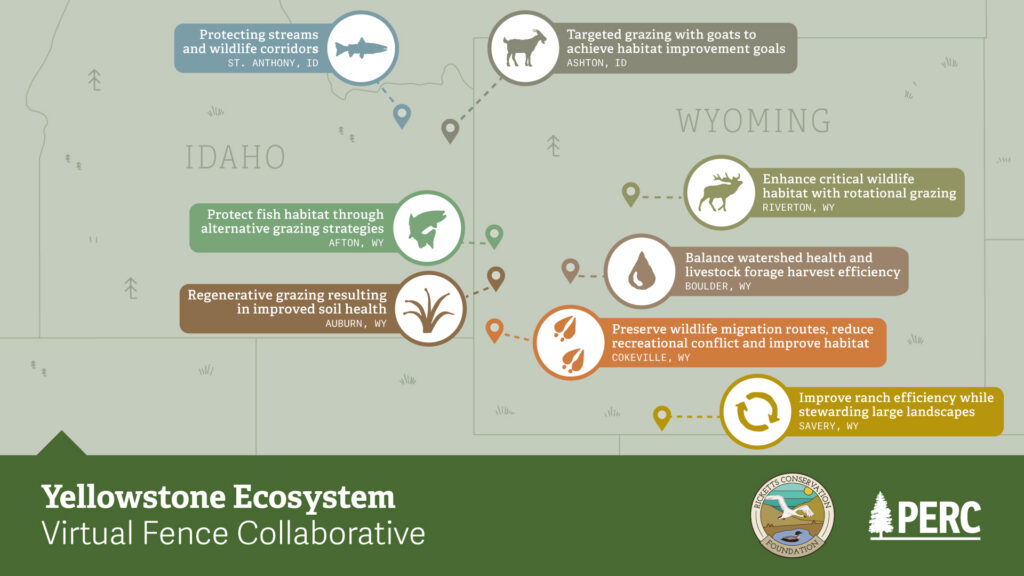
Projects Across the Yellowstone Ecosystem

The initiative will deploy virtual fencing technology across a diverse set of ranching operations, each targeting conservation outcomes specific to their landscape:

About PERC: The Property and Environment Research Center (PERC) is the national leader in market solutions for conservation, with over 40 years of research and a network of respected scholars and practitioners. Through research, law and policy, and innovative applied conservation programs, PERC explores how aligning incentives for environmental stewardship produces sustainable outcomes for land, water, and wildlife. Founded in 1980, PERC is nonprofit, nonpartisan, and proudly based in Bozeman, Montana.

About Ricketts Conservation Foundation: The Ricketts Conservation Foundation exists to study, protect and enhance populations of at-risk species through partnering with non-government and government organizations, educational institutions and public agencies to understand the natural processes and human management decisions affecting the Yellowstone Ecosystem.

###

For more information or to schedule an interview with a representative from PERC or RCF, please contact Kat Dwyer (PERC) at [email protected] or Shari Meeks (RCF) at [email protected].

Collaboration on the Dollar Lake Fire

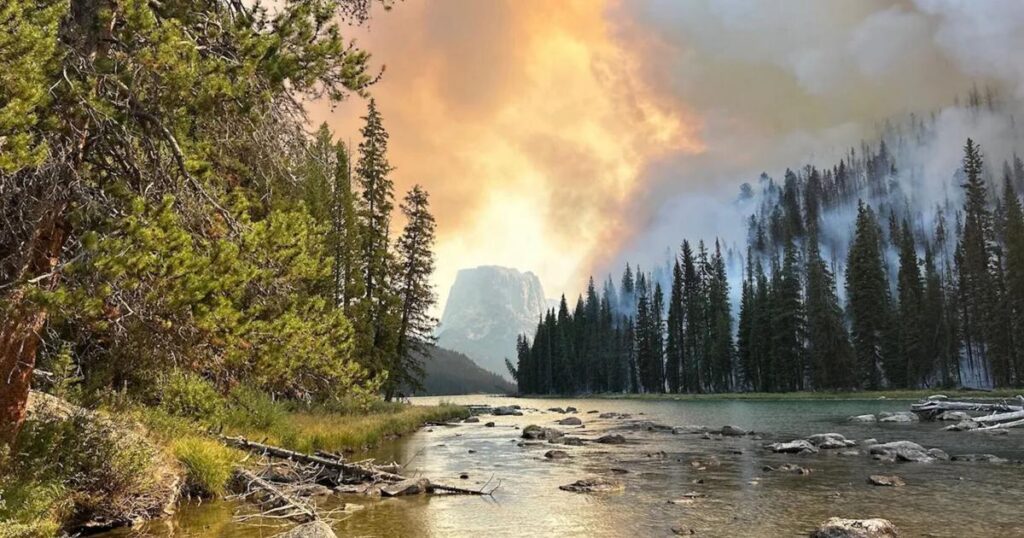
On August 21, 2025, a summer thunderstorm developed across the western Wyoming skies.  The area was ripe for wildfire as there had been little rain in the region since spring.  We distinctly recall this storm, because the cell moved eastward across Jackson Fork Ranch during the Saving Yellowstone Conservation Summit.  Not long into the afternoon sessions, cell phone emergency tones began sounding in the tent, warning of a nearby fire.  As the afternoon progressed, Summit participants could see an expanding plume of dark smoke, 28 miles to the northeast of us. While we were not in harm’s way, others were.

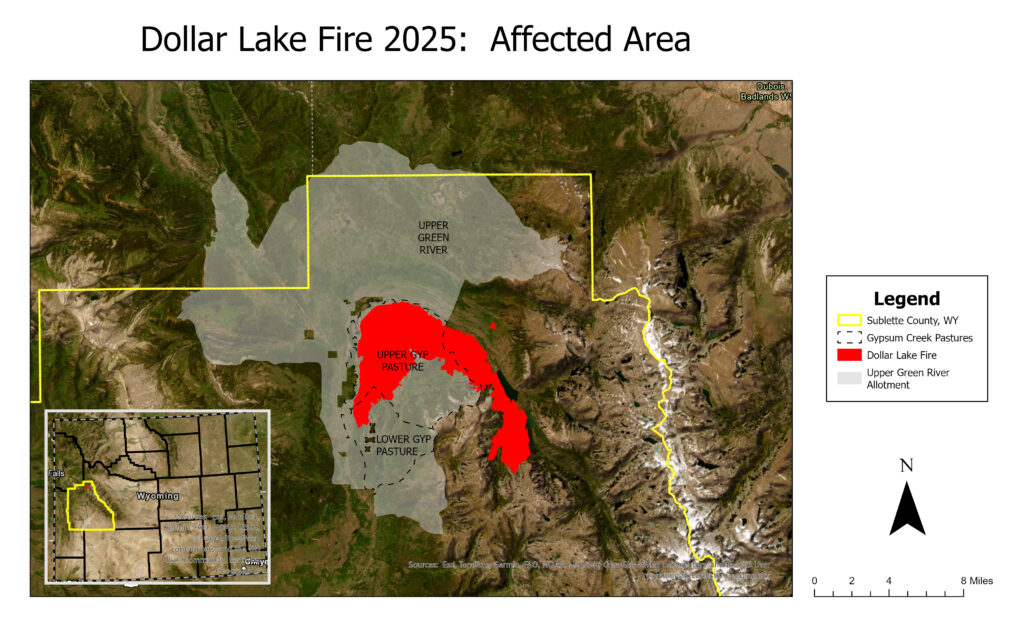
As is the case with most late-summer forest fires, the Dollar Lake Fire was most likely lightning-caused. Burning in thick timber on the Bridger-Teton National Forest’s (BTNF) Pinedale Ranger District and driven by strong winds, it burned 600 acres within hours. It eventually grew to over 19,000 acres according to the Teton Interagency Fire incident management page (Figure 2). 

The aftermath of a wildfire presents a unique opportunity for positive collaboration among multiple user groups with a strong connection to the resource.  Fire is an important part of landscape ecology and must be considered as part of the United States Forest Service’s (USFS) multiple use management mandate. There are many factors that play into fire recovery, where multiple use encourages collaboration, finding solutions that build relationships, exploring different opportunities for wildfire recovery, and leveraging funding from different sources to mitigate or offset costs for lost and damaged infrastructure.

Figure 2. Area affected by the Dollar Lake Fire.

The USFS requires that livestock on permitted grazing allotments be excluded from burned areas for a minimum of two years, or until 60% of vegetative ground cover is achieved in the area burned. However, wildfires often don’t burn landscapes evenly, nor do they discriminate against jurisdictional boundary lines, or fencelines.  In the Dollar Lake Fire, the burned area covered only a portion of two different pastures within the allotment, leaving unburned vegetation available for livestock consumption.  The fire also burned several miles of physical fencing. Replacing them by the onset of grazing season was unreasonable, which left the permittees with few practical options that would allow them to graze the area in 2026.

One out-of-the-box solution suggested when reviewing options for the 2026 grazing season was the use of virtual fencing. Along with a modified livestock grazing rotation and stocking rate, permittees chose to explore the idea of virtual fence technology to exclude cattle from the burned area. 

In 2024, the Ricketts Conservation Foundation established the Virtual Fencing Conservation Initiative and partners with producers on a variety of projects scattered across the Yellowstone Ecosystem. Virtual fencing is where livestock are fitted with a GPS collar that is programmed with “virtual” fences, or perimeters, within which livestock are contained. This prevents them from accessing burned areas, allowing for adequate vegetation recovery. 

The Ricketts Conservation Foundation is thrilled to partner with the permittees, the Sublette County Conservation District, and the USFS in 2026 and 2027 on the Dollar Lake Fire virtual fence implementation.  Using virtual fence to exclude livestock from grazing the burned area is key. This will result in two years of grazing deferment, allowing for successful wildfire recovery in the area.  Equally important, the collaboration creates an opportunity for livestock producers to implement a novel technology year-round. The economic, social, and conservation benefits on private land can be further explored by both livestock producers and the Ricketts Conservation Foundation using the captured results.  We hope that this approach of simultaneously addressing the concerns of land managers and producers can become more widely used within the Yellowstone Ecosystem and beyond.

Virtual Fence Conservation Partnership

Press Release – 9/15/25        

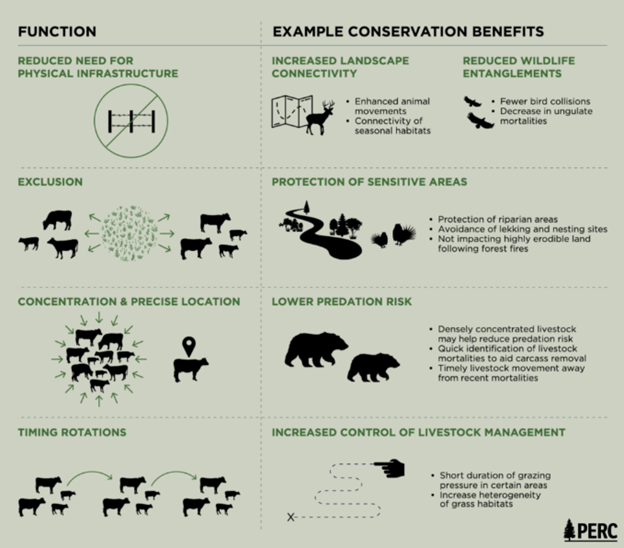
Over the last two decades, agriculture technology has made its impact across the globe, with some of the greatest potential being in ranch technology. Various applications and innovations give ranchers the ability to monitor everything from the grass in their pastures to the grazing attributes of their herd.  Virtual fencing is one of these technologies, which allows the rancher to not only observe livestock location, but also to manage that herd resulting in significant conservation benefits (Figure 1).

Figure 1.  Example Conservation Benefits published by PERC  https://www.perc.org/2024/11/21/unlocking-the-conservation-potential-of-virtual-fencing/

Despite the benefits, many ranch operations interested in this technology find that startup costs can be prohibitive.   The Ricketts Conservation Foundation (RCF) is excited to release the Virtual Fence Conservation Partnership Program, where RCF partners with ranches to initiate virtual fencing and monitor for conservation benefit.

RCF is offering 100% cost share for base stations (up to $50,000) and 50% cost share for collars and neckbands (up to $100,000) over a four-year period.  Ranchers enter into a four-year agreement with RCF, where both parties collaboratively develop anticipated outcomes, conservation goals, and a monitoring plan. 

Interested ranching operations are encouraged to submit applications via https://form.jotform.com/252084643989067.  The application period opens September 15 and closes November 15. 

Questions may be directed to Shari Meeks at [email protected].