Ricketts Conservation Foundation - National Loon Center Research Grants
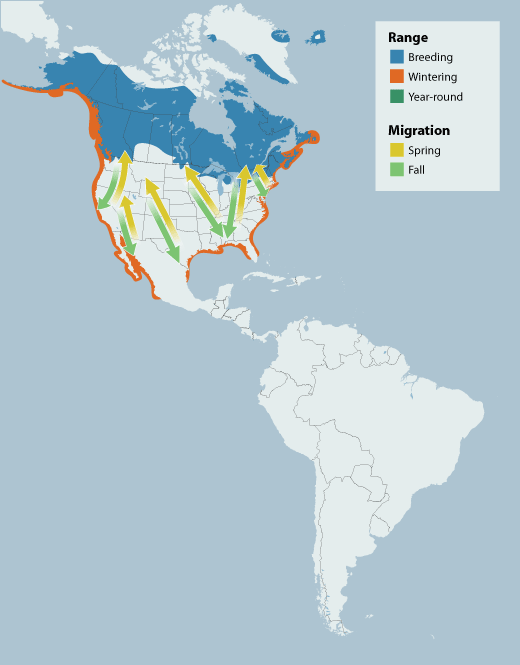
Since 2018, the Ricketts Conservation Foundation (RCF) has studied loons in the Yellowstone Ecosystem. However, Joe Ricketts' commitment to loon conservation stretches back to 2013, when he funded loon conservation efforts in the Yellowstone Ecosystem, Minnesota, and Massachusetts. While the loons in Yellowstone are the southernmost population in North America, the vast majority of common loons are found in Canada, Alaska, and the northern tier of the lower 48 states (Photo 1). These birds also face conservation challenges, and RCF is doing its part to help these birds on a continental scale.
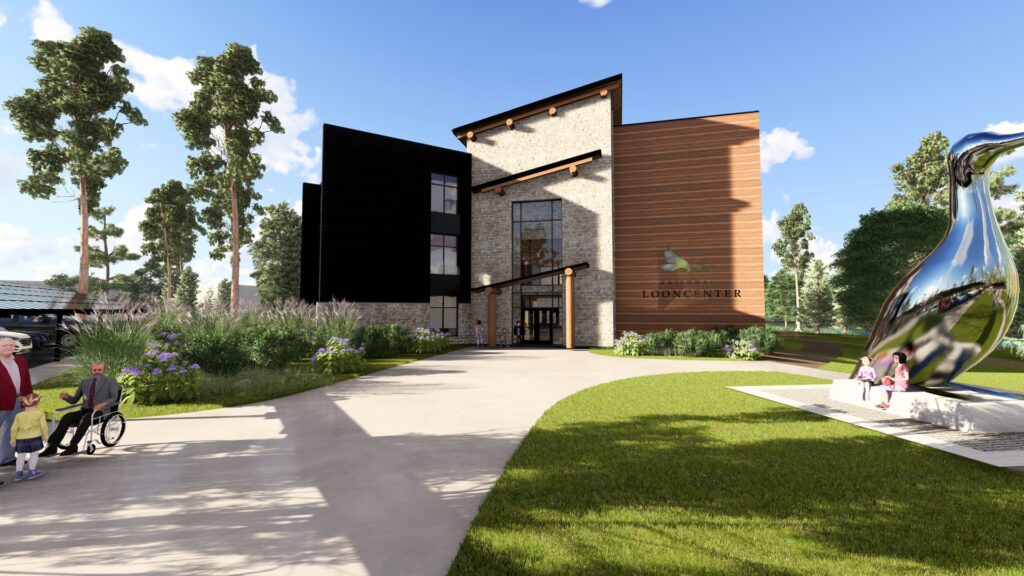
In 2025 RCF donated $1,000,000 towards the National Loon Center’s (NLC) new headquarters in Crosslake, Minnesota (Photo 2). In addition, RCF committed to providing $100,000/year from 2025 to 2029 to spur conservation-related research on Common Loons throughout North America.
Photo 2. Design of new National Loon Center headquarters in Crosslake, MN.
In the first year of funding conservation-related research, we initiated a range-wide genetics study with the Bird Genoscape Project at Colorado State University. Our goal is to better understand genetic variation in the Common Loon. This species is found throughout Canada, Alaska, and the northern tier of the lower 48 states. However, there are also breeding populations in Greenland and Iceland. We hope to obtain samples from all these populations so conservationists have a comprehensive understanding of their interactions, migration routes, and wintering grounds.
Currently, we are reviewing 12 great proposals for 2026 and now have the difficult decision to decide which to fund. Thankfully, RCF and NLC have an excellent scientific advisory council making these decisions, so we look forward to their decisions. Stay tuned!
A Wildlife-Friendly Fence Story
Fences are a major obstacle to wildlife migrations in the Yellowstone Ecosystem. Since its inception in 2018, the Ricketts Conservation Foundation (RCF) has partnered with Jackson Fork Ranch (JFR) to make wildlife friendly fence modifications to the bison fence that stretches along the upper Hoback River. Beginning in 2019, RCF worked with JFR and the Wyoming Game and Fish Department (WGFD) to install 22 wildlife crossings in the fence. This improved wildlife movements across the ranch greatly. In 2024, JFR decided to enhance the wildlife crossings even further. They proposed to design let-down fence sections up to 1200’ in length in targeted areas where known mule deer migration corridors cross the ranch.
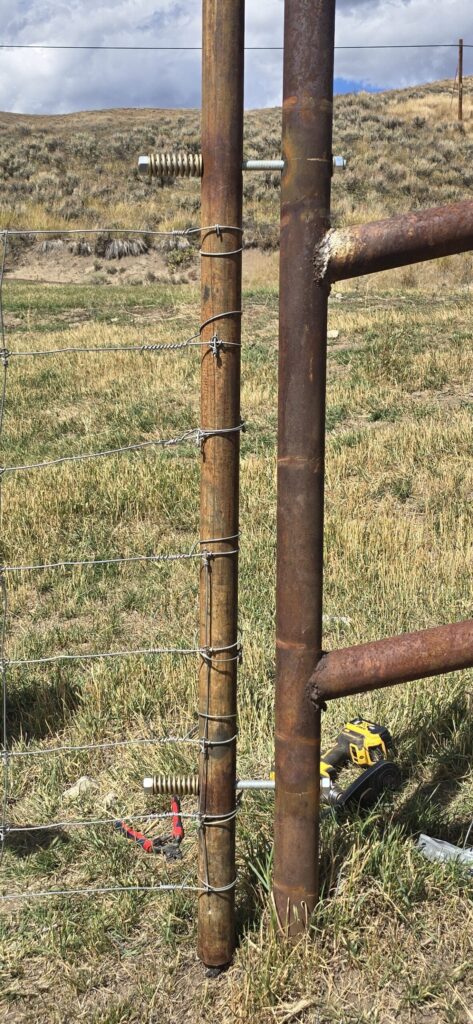
Photo 1. Holes are drilled and hinges are placed at the ends of each section of fence to allow the fence to pivot.
After consulting with WGFD, RCF assisted with this effort in spring of 2025 by inventorying the identified migration corridors at Horse Pasture Draw and Nutting Draw. JFR then hired a local welding company to modify the fence posts. The welder added sleeves at the bottom of some posts, which allow for the post to be lifted off its base easily. Other posts have rebar stays that the fence was then tied to, with cups to hold the rebar in place on both the bottom and top of the fence post. In addition, by modifying the ends of each section, the fence can pivot (Photo 1), lay flat, and thus present less of an obstacle to migrating animals.
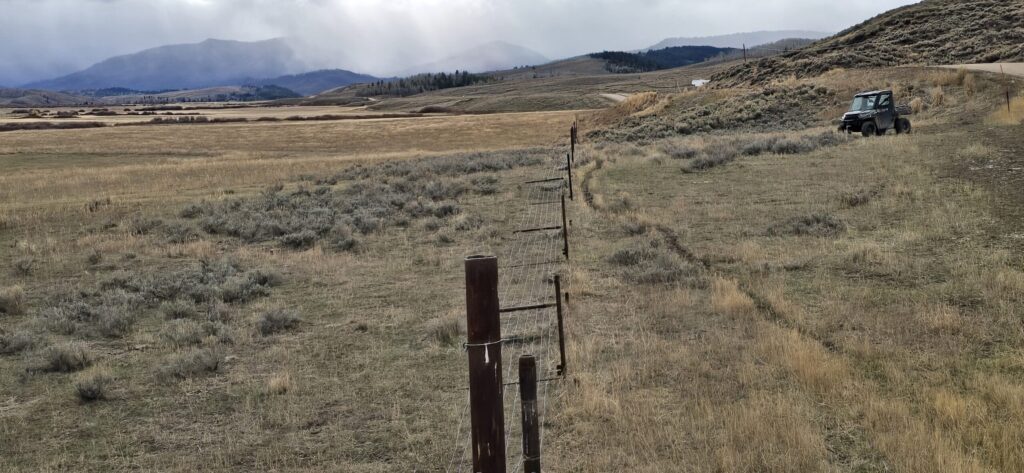
Once completed, these sections of fence were to be let down on October 15 (Photo 2), just in time for the fall mule deer migration. However, the Jackson Fork Ranch is surrounded primarily by the U.S. Forest Service Hoback Grazing Allotment, which permits seasonal grazing by cattle and horses. Wyoming is a fence-out state, so it was imperative to coordinate with neighboring users regarding the timing of letting the fence down. RCF coordinated with the Hoback Grazing Association so JFR could reach its goal to improve wildlife movement across the ranch without complicating roundup.
Photo 2. A section of fence that has been let down for wildlife passage.
RCF and JFR will continue to work with WGFD to monitor the use of these segments by migrating wildlife and determine if any additional modifications need to be made to the fence in the future.
As a private landowner, it’s important to continue learning about your property and how to align your vision with what takes place in the surrounding landscape. It’s never too late to improve your management when you find out something you didn’t know that you didn’t know. In this case JFR was unaware of the mule deer migration corridor when they erected the bison fence. However, once they were made aware of this, they worked with RCF to remedy the situation.
RCF continues to partner with WGFD, focusing on additional opportunities to improve mule deer migration movement within the Hoback River watershed in 2026. We will continue to support landowners that now know what they didn’t know before and choose to reduce their impact on the landscape through wildlife friendly fence improvements.
Stay tuned for more information in 2026.
2025 Summer Bird Banding Summary
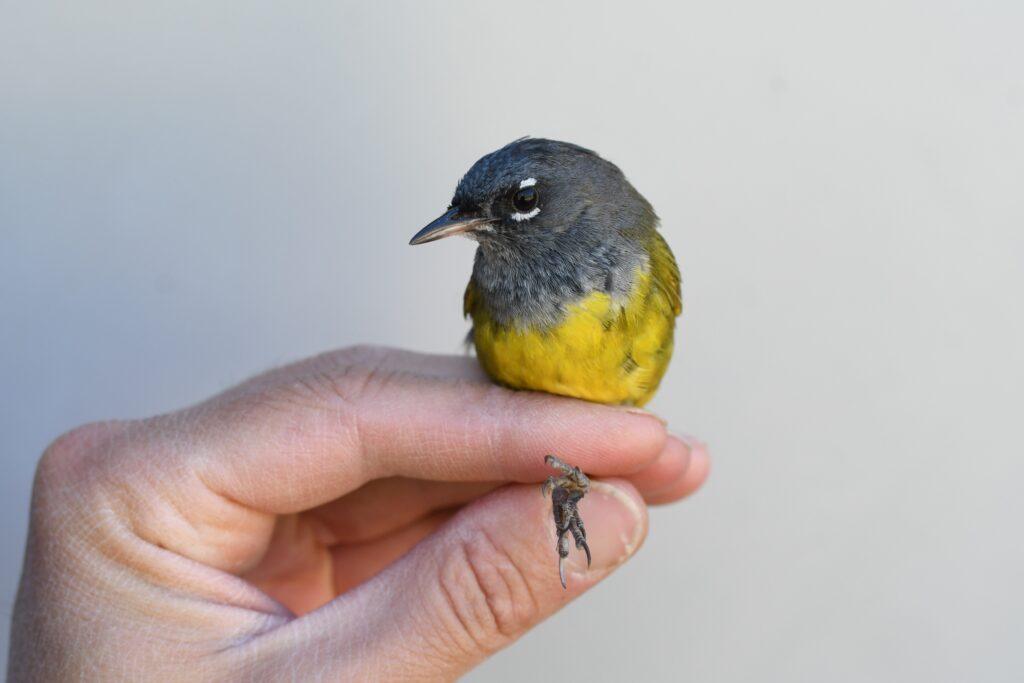
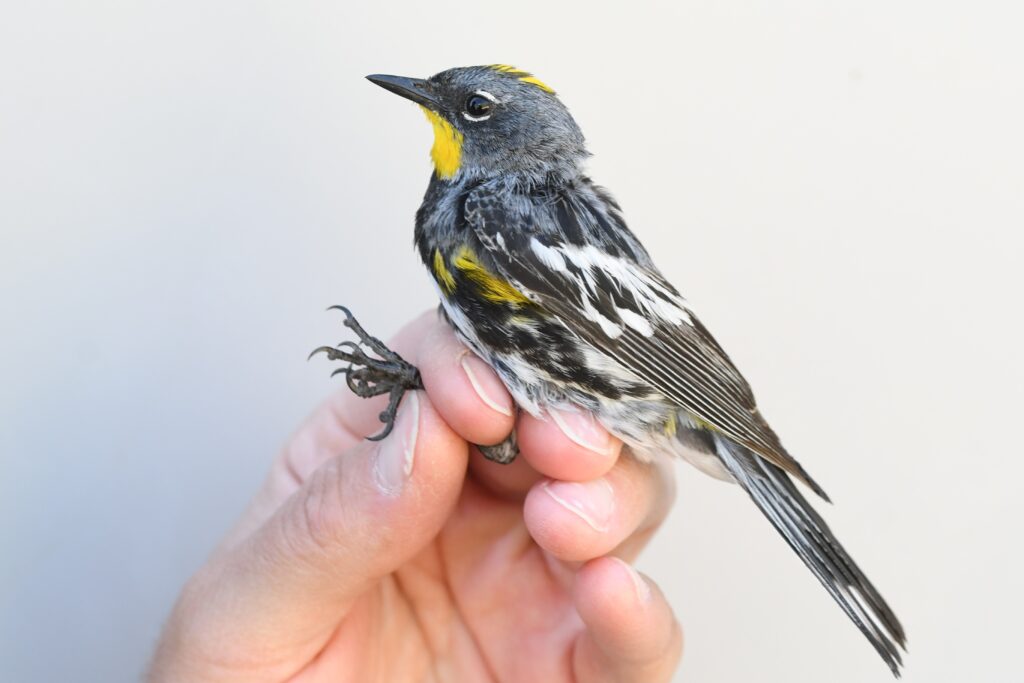
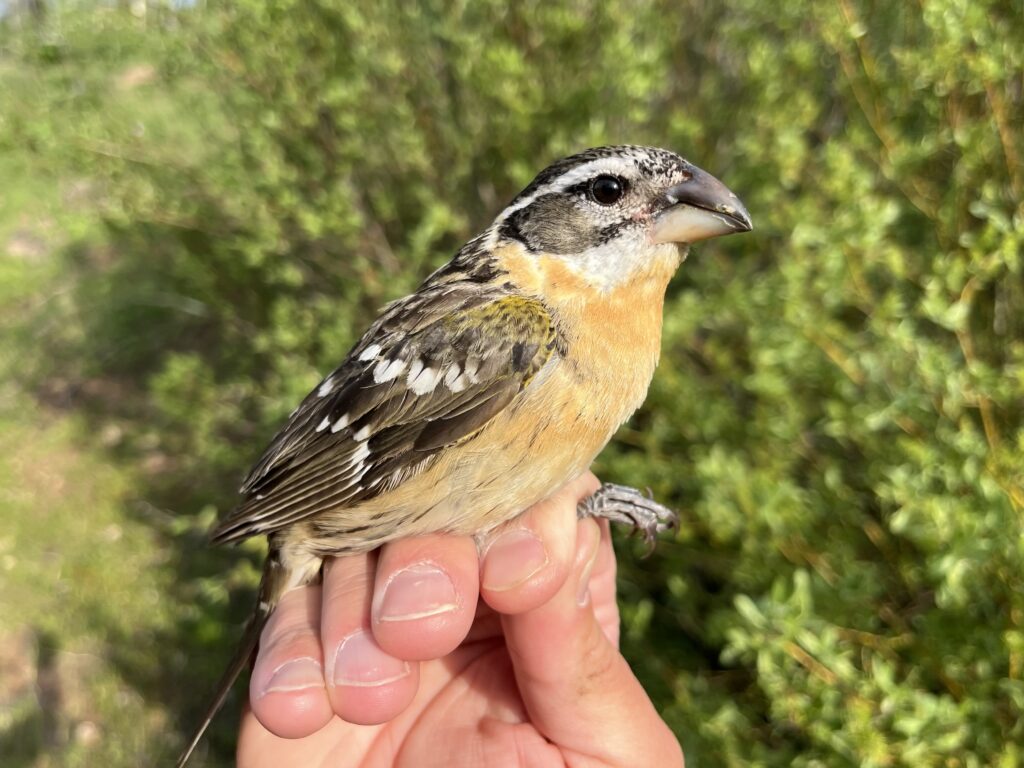
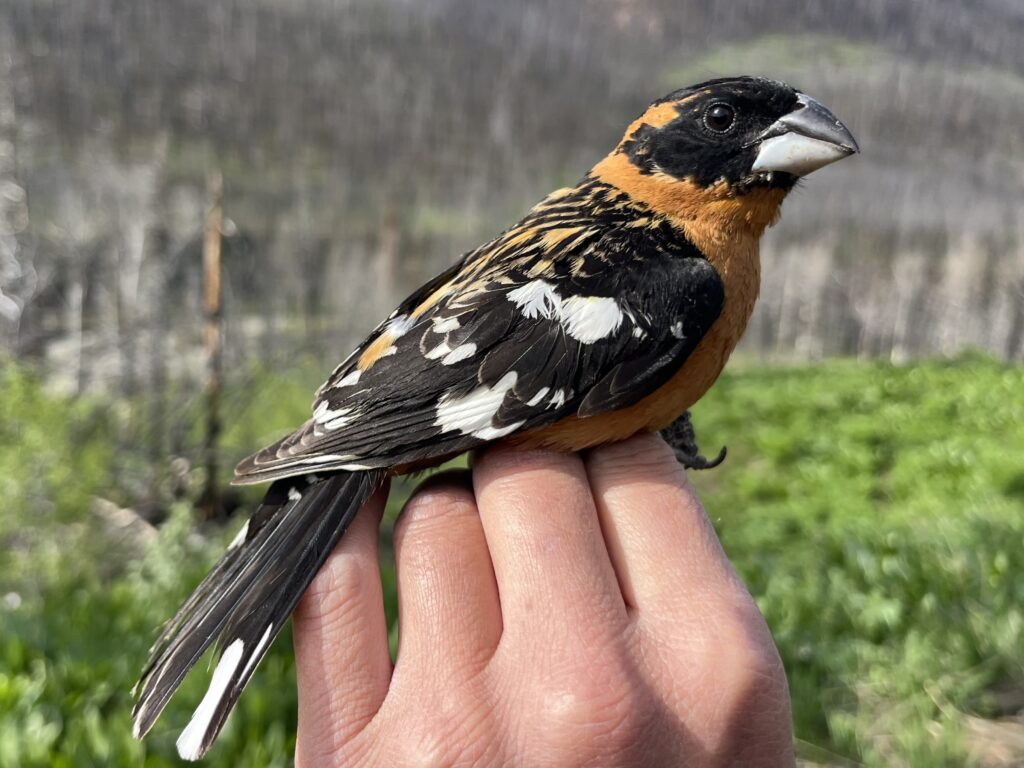
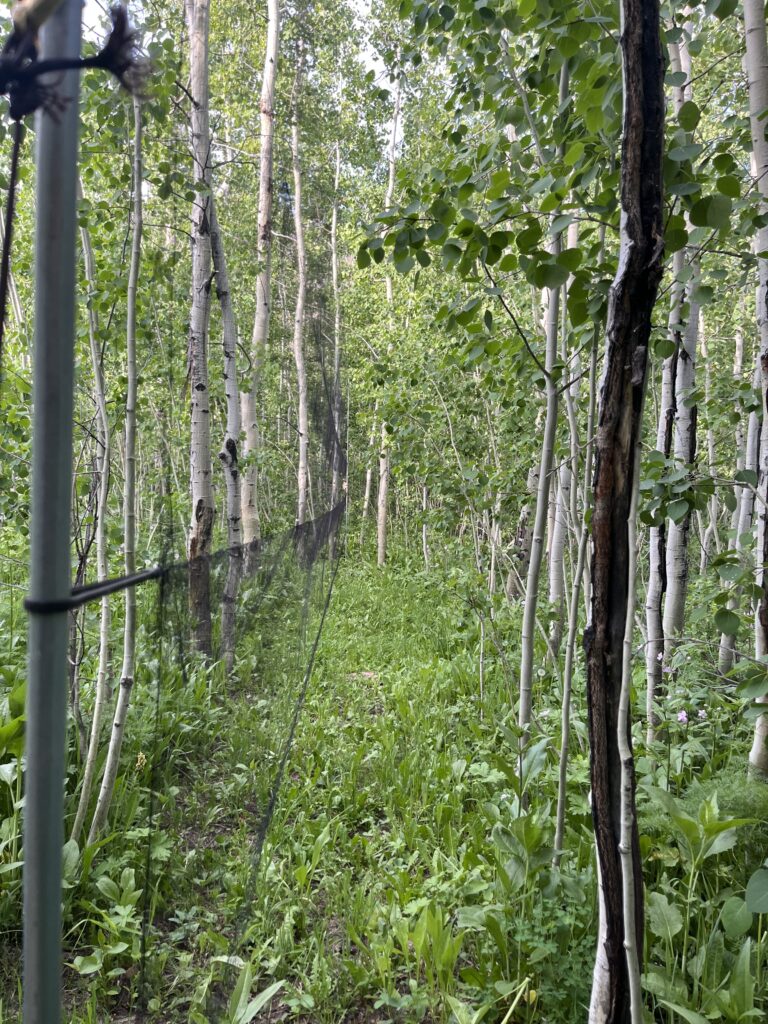
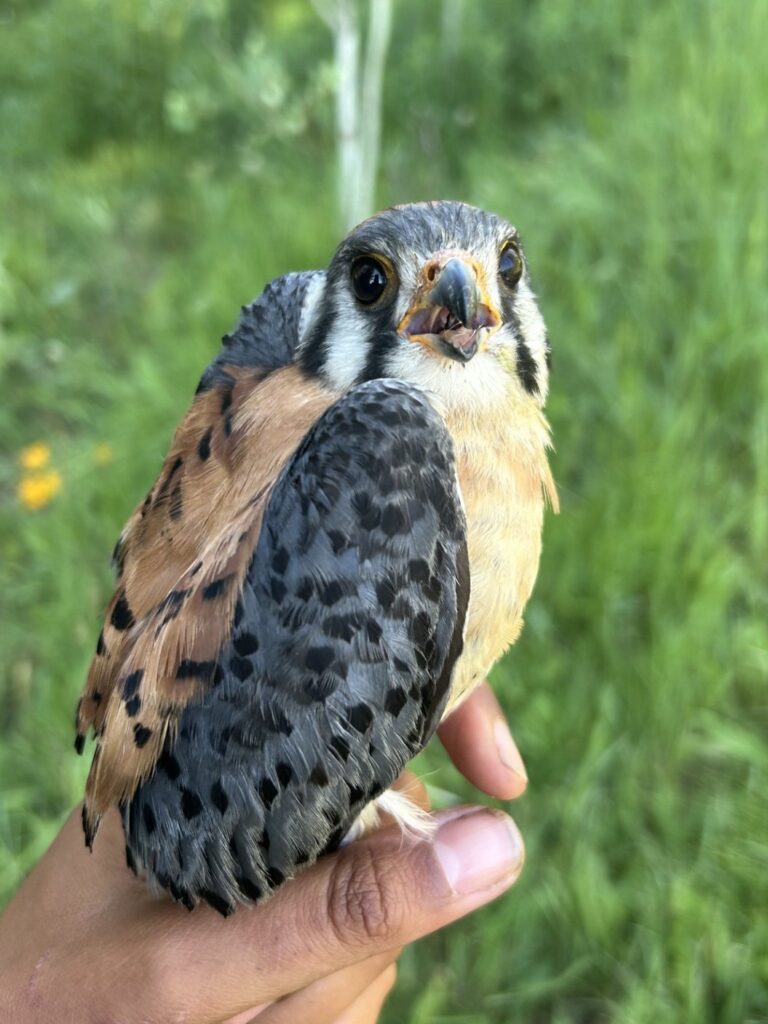
View of the Wyoming Mountains from one of our Control sites. Aspen, Conifers, and Sagebrush are common components of the habitat at all our banding sites.Male MacGillivray’s Warbler, one of the most common birds that we catch, especially in regenerating Aspen at our Wildfire sites.Western Warbling Vireo is a common species that we catch just a few of at each of our sites. Yellow-rumped Warbler, male.Female Black-headed Grosbeaks. This species is a fun but uncommon capture for us. Of the 17 that we banded this year, 11 of them were at our Wildfire sites.Male Black-headed Grosbeaks. This species is a fun but uncommon capture for us. Of the 17 that we banded this year, 11 of them were at our Wildfire sites.Mist net setup in a dense young Aspen grove.American Kestrel, male, is the smallest species of Falcon in North America, and our crew was very excited to catch our first ever this summer.
Ricketts Conservation Foundation’s 2025 bird banding season ran from May 31st to August 8th. With the help of our fantastic crew of seasonal bird biologists, and a summer of beautiful weather, we had a fun and very successful season of catching and studying breeding songbirds.
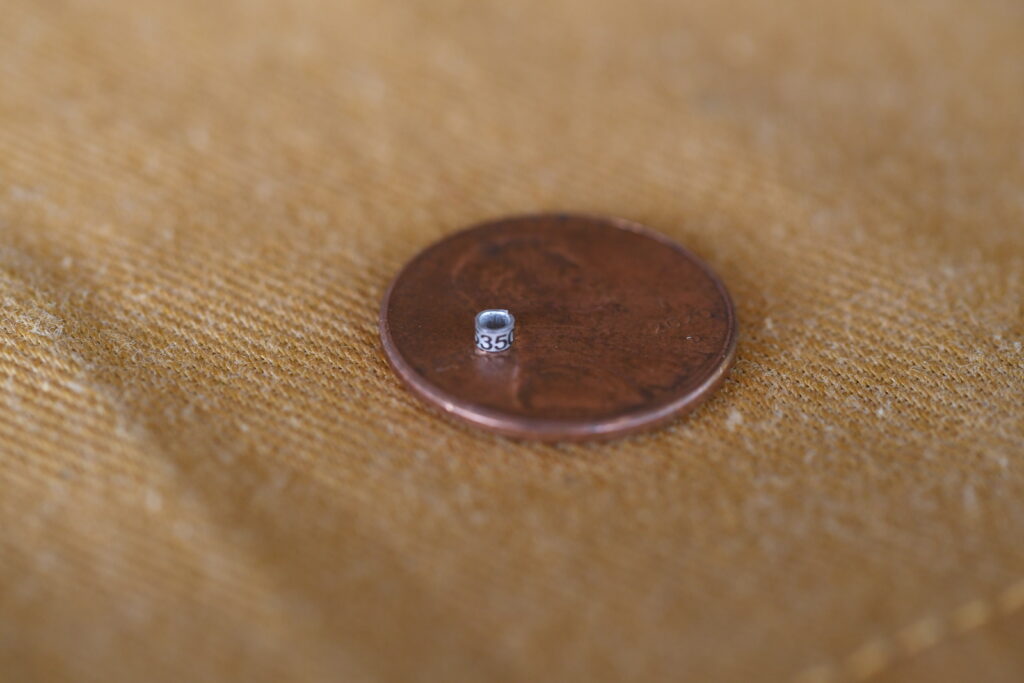
RCF biologists have been using bird banding to study avian breeding activity in different habitats around Monument Ridge since 2018. Following the MAPS protocol, RCF biologists capture a variety of small songbirds, take a series of measurements to access the bird’s health, and attach a small, lightweight metal ring to the bird’s leg with a unique 9-digit number.
In our first year, 3 stations were established to compare bird communities in areas affected by wildfire, areas scheduled for Forest Service prescribed thinning and controlled burning, and areas of old growth Aspen without any influence of fire. Our banding operation has grown over the years, and 2025 was our first year operating 9 banding stations- 3 for each type of area. We operate each station once every 10 days, for 6 hours starting just before sunrise; each site was operated 7 times over the course of the season.
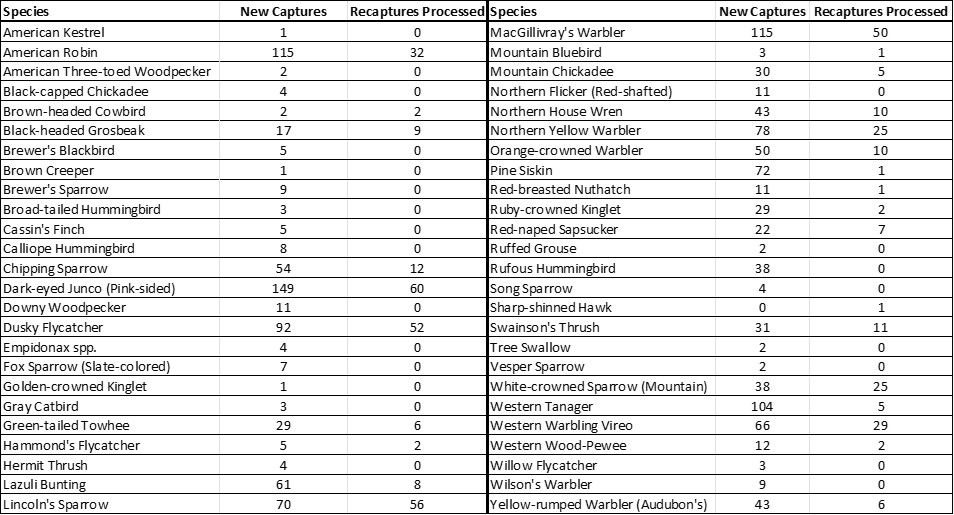
Collectively we caught 49 species of birds, banded 1,450 individuals, and processed 431 recaptures. Of our recaptures, 145 were banded in the previous year. All our recaptures are of individuals that were banded at one of our sites in the area; we have not yet ever captured a bird banded away from our sites at Monument Ridge. Our oldest recapture this summer was a female Brown-headed Cowbird, who was banded as an adult in 2020, and is at least 6 years old now. Our most common species banded were Dark-eyed Junco (148), American Robin (115), and MacGillivray’s Warbler (115). Above is a chart of all of our captures from this summer.
All the banding sites are comprised of 10 mist nets suitable for capturing small birds, and we see variation in species composition and abundance in different habitats. In our wildfire burned sites, we have young regenerating stands of Aspen trees, which serve as excellent habitat for songbirds. In 2025, we banded a total of 679 birds at our wildfire sites. Due to a lack of fire-induced Aspen regeneration at our other sites, we catch fewer birds there- 460 were banded at our treatment sites (which have been thinned by the Forest Service but not burned) and 311 were banded at our control sites. Looking back at our 3 most frequently banded species of birds, we can see differences in their abundance at different sites. For our most common species, Dark-eyed Junco, only 12% were banded at the wildfire burn sites, and 88% were banded at the un-burned sites. However, for MacGillivray’s Warblers 57% were banded at our 3 wildfire sites, and the other 43% were spread out across the 6 un-burned sites. And then there’s American Robins, which were caught by fairly even numbers across all 9 sites.
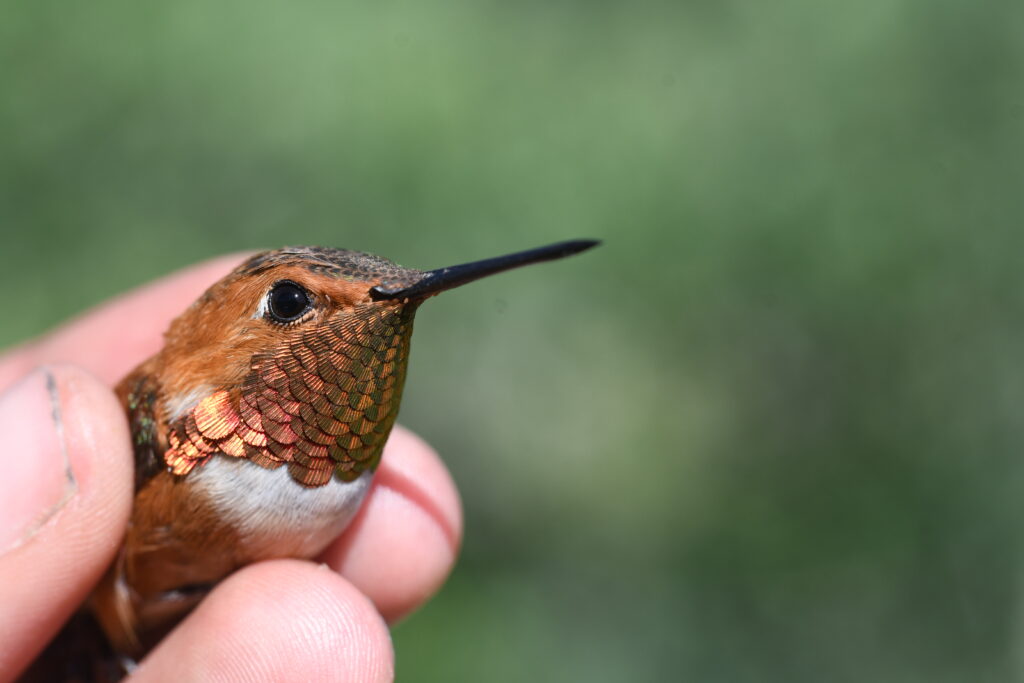
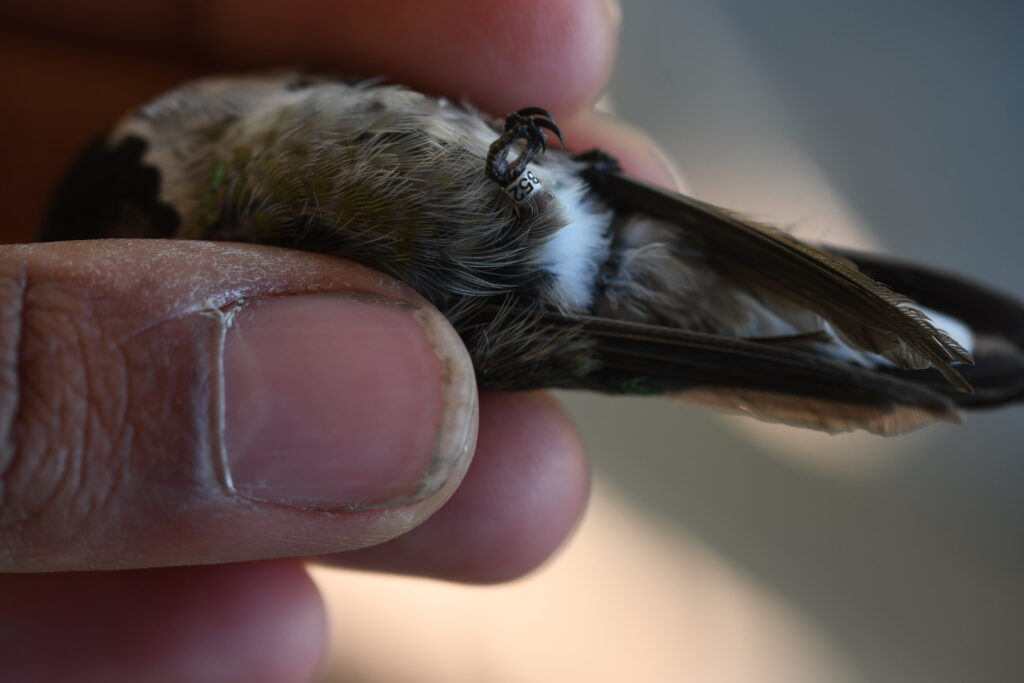
Adult male Rufous hummingbird with an ultra-lightweight transmitter attached to its back.Hummingbird just before being released.Hummingbird with banded leg.Band on a penny- this is the smallest size band that can be put on a bird.
This summer, RCF also had a hummingbird bander visit our sites to provide specialized training to our lead and experienced banders. Because of their very small size, hummingbirds require a separate permit to be allowed to band them. By training our banders to tag the hummingbirds captured at our sites, we plan to begin more closely studying how migrating hummingbirds are using the regenerating Aspen habitat in burned environments.
2025 was a historic year for RCF’s banding operation, and it would not have been possible without all the hard work of our seasonal banding crew- Amaya Bechler, Alan Moss, Wyatt Westerkamp, Aiden Gifford, and Cheyenne Esposito. Without their help and dedication, our terrific season would not have been possible! With the continued support of Ricketts Conservation Foundation, we look forward to continuing to use bird banding to study songbirds in the GYE and help inform forest management decisions to best conserve the beautiful diversity of migratory birds in our region.
Riparian Restoration & Beavers
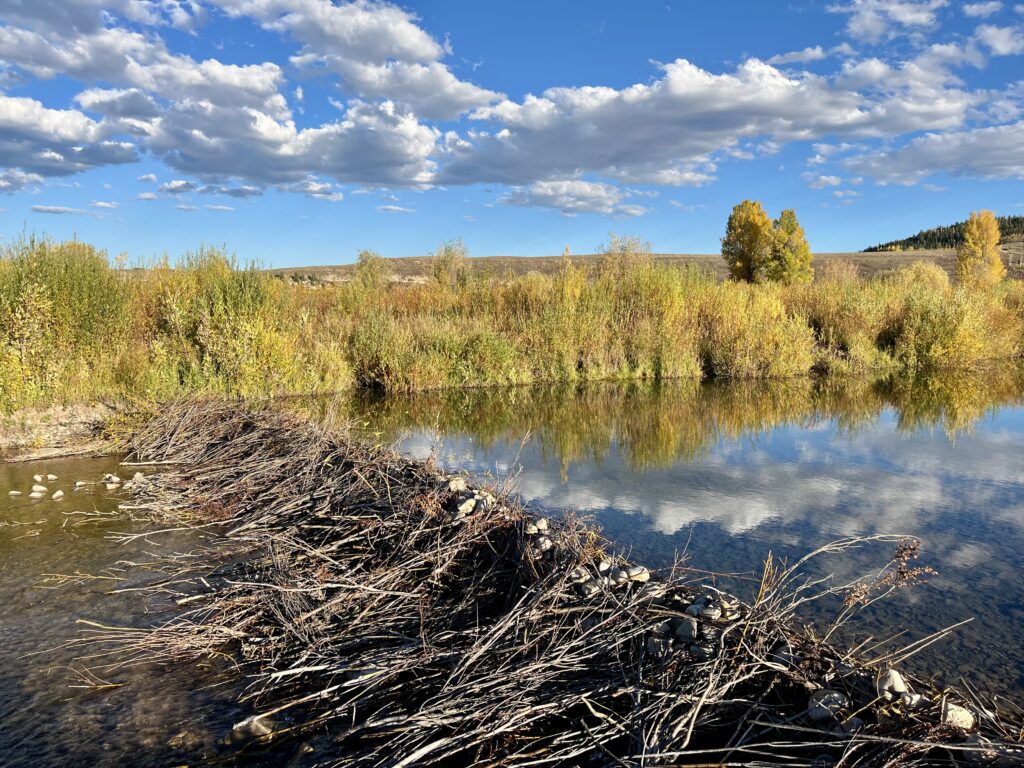
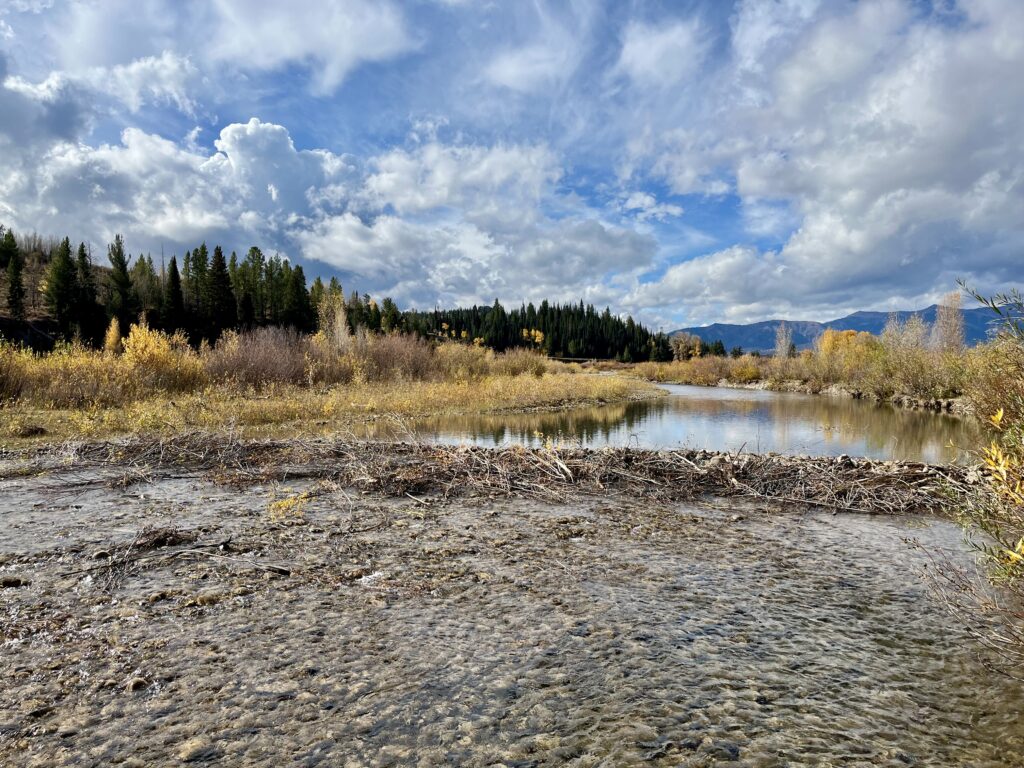
Beavers are considered ecosystem engineers. They are vulnerable to predators when on land, so they have adapted to avoid predation by building dams within streams. These dams create ponds where they can swim from their lodge to water’s edge to harvest the willow and cottonwood branches that they store in the bottom of the pond as a winter food supply. Their dams hold back water, creating wetlands that slow water movement across the landscape. This allows infiltration into the underlying soil and groundwater recharge, providing a source of water to maintain stream flow during dry periods.
While beavers are valuable for ecosystem function and maintenance, their pelts have also been found valuable in the fashion industry. Two hundred years ago western Wyoming was the epicenter of the global trade in beaver pelts. Felted beaver fur was turned into fashionable hats for European gentlemen, increasing the demand for beaver products. This led trappers to pursue beavers towards extirpation in almost every watershed in the Intermountain West. Fashions changed in the 1840s, but by then most of Wyoming’s beavers were gone. Even now, it’s believed that beaver numbers in the western USA are a fraction their historic levels. Beavers on the landscape aren’t without challenges, despite their ecological and economic value. They don’t distinguish between streams and ditches, creating conflicts with irrigators and other agricultural interests. Their constant building of dams requires a steady source of logs and branches that they procure by using their teeth to cut down trees and shrubs. This creates conflicts in areas where land managers seek to increase riparian vegetation to stabilize river channels and preserve wildlife habitat.
As fall arrives, this conflict becomes apparent locally. After a dry and warm summer, the Hoback River is very low, and the local beavers are getting ready for winter. They’re building dams across the river and use the resulting reservoirs to store the caches of Willow and cottonwood branches they will feed on during winter.
It takes a lot of branches to build these dams and stock the caches, and they take them from the surrounding riparian corridor.
We understand the ecological benefits of encouraging beavers to recolonize their historic ranges. However, we also recognize the need to protect riparian vegetation required by other wildlife to survive as well as the need for irrigation management. Ricketts Conservation Foundation is excited to explore solutions that will encourage a balanced approach to this complex natural resource issue in 2026.
Virtual Fence Conservation Partnership
Press Release – 9/15/25
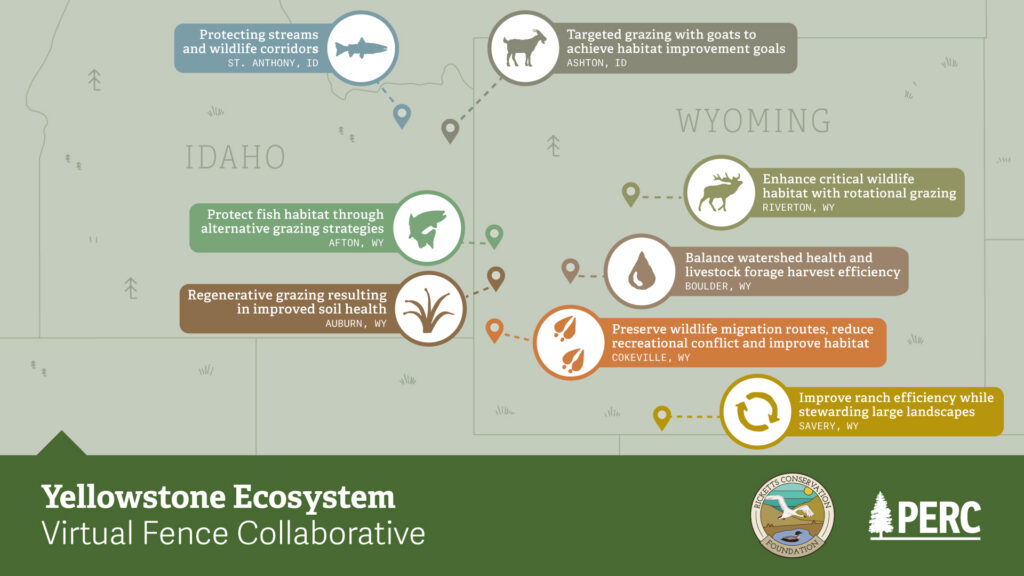
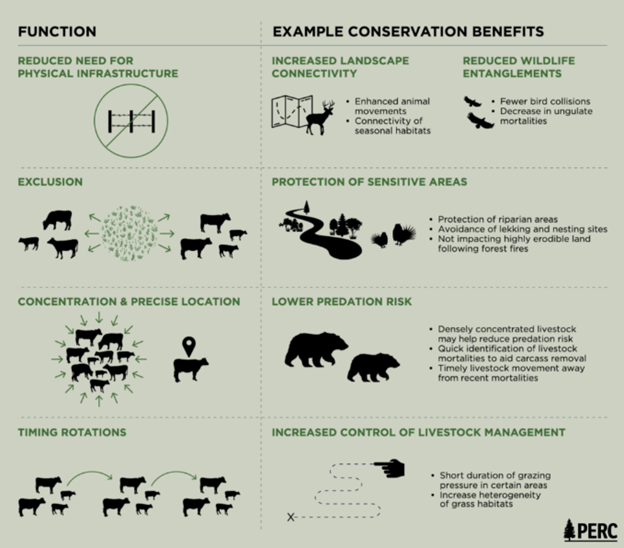
Over the last two decades, agriculture technology has made its impact across the globe, with some of the greatest potential being in ranch technology. Various applications and innovations give ranchers the ability to monitor everything from the grass in their pastures to the grazing attributes of their herd. Virtual fencing is one of these technologies, which allows the rancher to not only observe livestock location, but also to manage that herd resulting in significant conservation benefits (Figure 1).
Despite the benefits, many ranch operations interested in this technology find that startup costs can be prohibitive. The Ricketts Conservation Foundation (RCF) is excited to release the Virtual Fence Conservation Partnership Program, where RCF partners with ranches to initiate virtual fencing and monitor for conservation benefit.
RCF is offering 100% cost share for base stations (up to $50,000) and 50% cost share for collars and neckbands (up to $100,000) over a four-year period. Ranchers enter into a four-year agreement with RCF, where both parties collaboratively develop anticipated outcomes, conservation goals, and a monitoring plan.
Interested ranching operations are encouraged to submit applications via https://form.jotform.com/252084643989067. The application period opens September 15 and closes November 15.
Ricketts Conservation Crew Kicks Off Field Season in Yellowstone
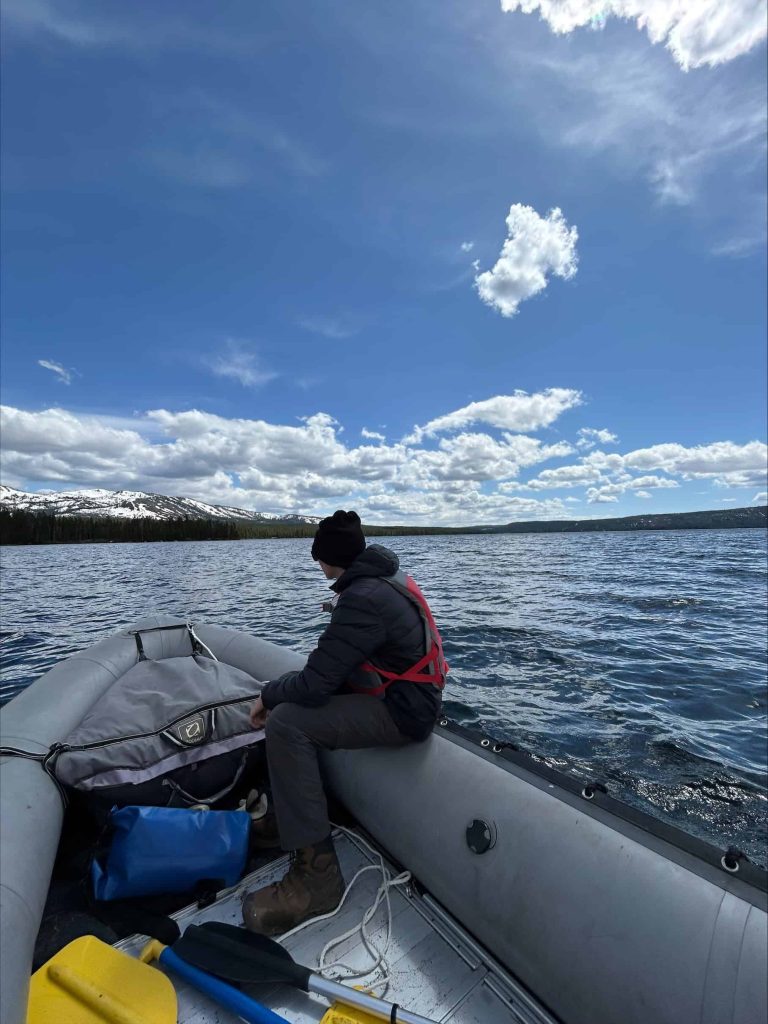
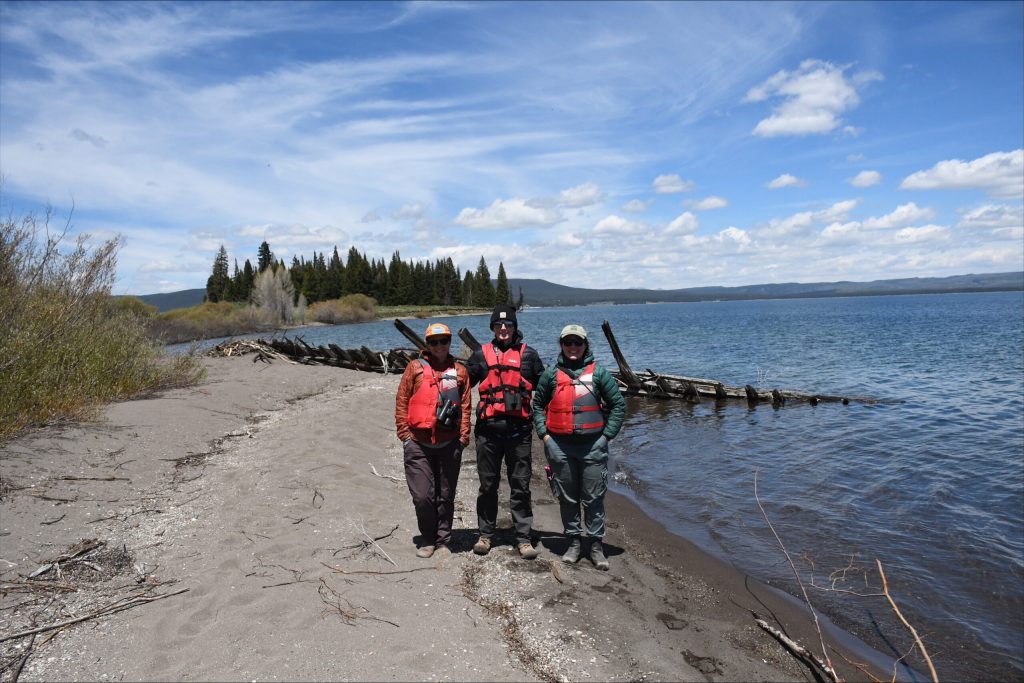
Field season is officially underway for the Ricketts Conservation Loon Crew, and we're excited to be back in Yellowstone National Park! So far, we’ve confirmed six active nests—an encouraging start to the season.
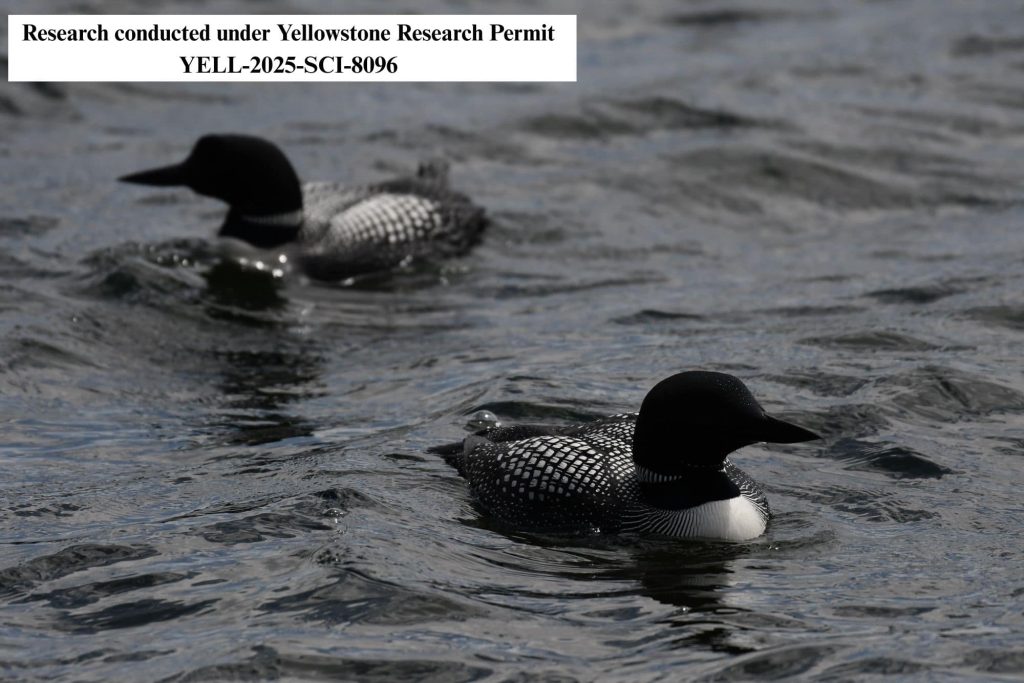
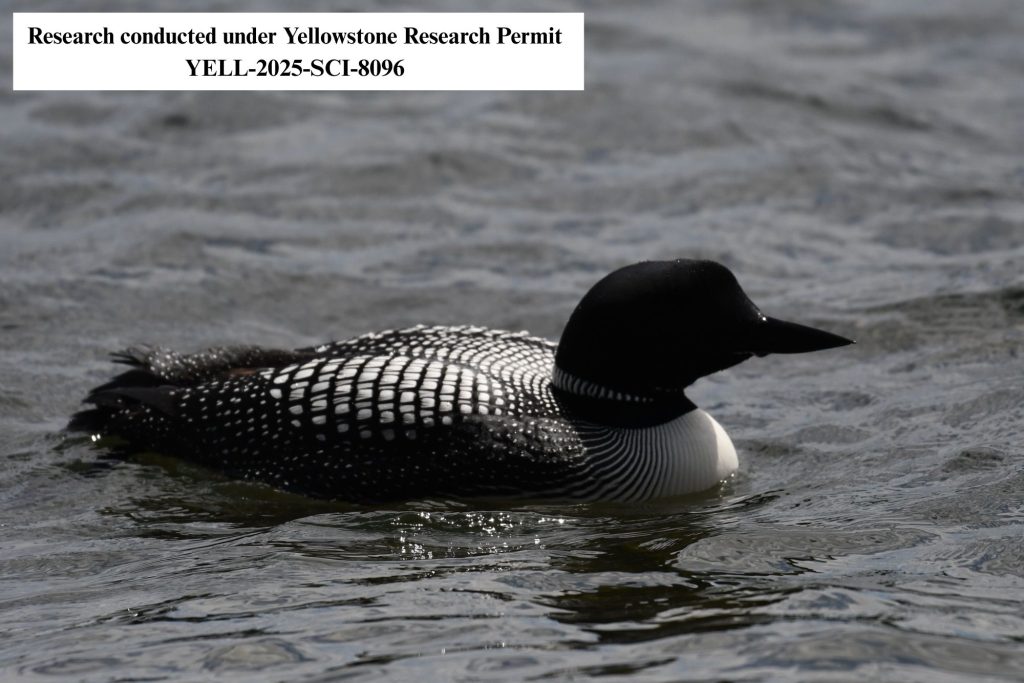
The loons in the Greater Yellowstone Ecosystem represent the southernmost breeding population of Common Loons in the world. It’s a small but mighty group, and their conservation is crucial. Because this population is so limited, protecting nesting sites from disturbance is one of our top priorities. Loons are incredibly sensitive to human activity during nesting season and are vulnerable to nest failure if approached too closely.
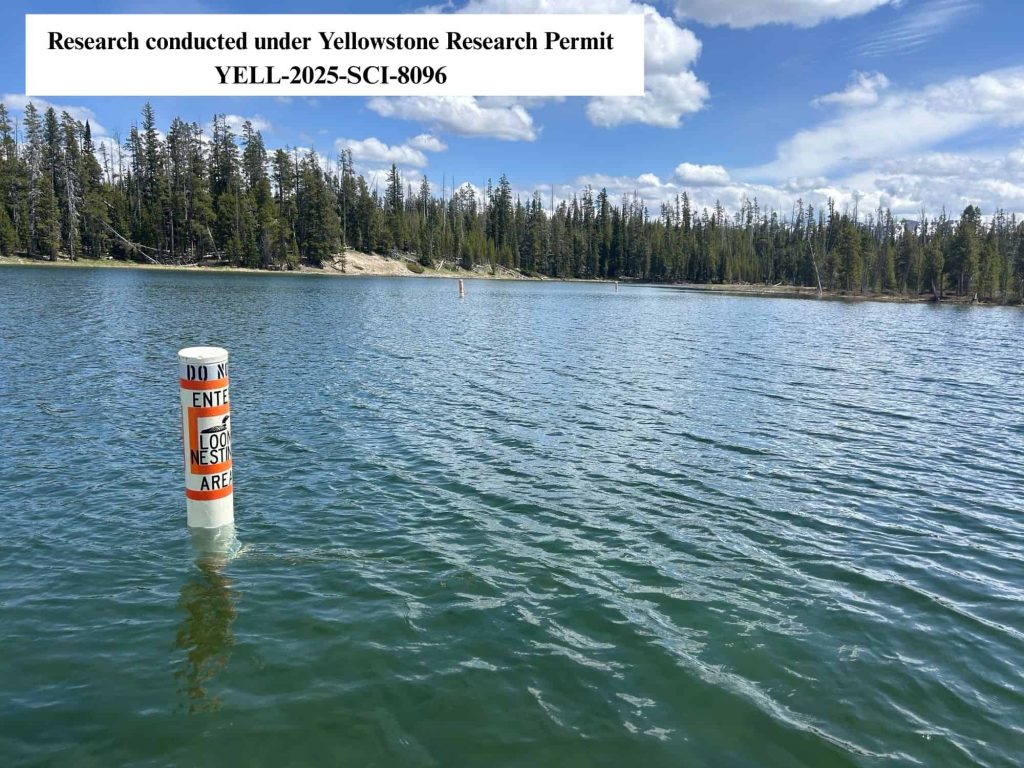
To help keep them safe, our team has established protective closures around known nesting areas. If you’re visiting the park this summer and see signage near lakeshores, it’s likely part of our efforts to give loons the space they need to raise the next generation.
During the early weeks of the field season, our crew conducts occupancy surveys. This means we’re out visiting historically occupied lakes to check for returning pairs, signs of nesting activity, or potential new territories.
Stay tuned for more updates from the field and if you’re in Yellowstone, keep your eyes (and ears) out for these iconic northern divers. Just remember to give them plenty of space to do their thing.
The Clark's Nutcracker: My Whitebark Pine Story
What first interested me about the Whitebark Pine wasn’t the tree at all. It was the Clarks Nutcracker. That little bird, I learned, has lived in a symbiotic partnership with the Whitebark Pine for millennia, distributing the tree’s seeds far and wide, and caching them every Fall as a food source during the winter and following Spring. And it’s those seeds from which we get new trees. It’s also those same, calorie-rich seeds that feed bears, red squirrels, and other species critical to a balanced and sustainable ecosystem. So with Whitebark Pine succumbing to blister rust, mountain pine beetles and climate change, the knock-on effects were far reaching. There are now more dead whitebark pines than live ones and in some places such as Glacier National Park, 90 percent of whitebark pines have died.
But my whitebark pine story is one of hope and restoration.
I first heard the story of the tree and the bird from Doug Smith, who at the time served as the Senior Wildlife Biologist at Yellowstone National Park. Doug introduced me to Diana Tomback, who has studied and advocated for these species for more than 30 years. Once I heard her describe how the birds and trees rely upon each other I knew it was a story that needed to be told. Raising awareness about this unique relationship, and the bigger issues facing the whitebark pine, was a critical step in helping to solve this crisis. This was exactly the type of issue for which I established the Ricketts Conservation Foundation.
In my mind, the most powerful way to tell a story is through film. Seeing and hearing a story brings it to life in a way few other things can. So I discussed the idea of documenting the Clarks Nutcracker and the Whitebark Pine story with the Cornell Lab of Ornithology’s Center for Conservation Media. Working closely with the talented team at Cornell, we got to work on what proved to be a multi-year project, capturing footage that had literally never been seen before. One of the resulting films – Hope and Restoration: Saving the Whitebark Pine – is a vital way to sound the call for people to rally behind. A call to save this centuries-old relationship between a bird and a tree, and all the other animals and plants who depend on them.
We then approached American Forests to strategize and publicize this conservation crisis. American Forest’s CEO, Jad Daley, was, unsurprisingly, already familiar with the Whitebark crisis and identified the Whitebark Pine Restoration Plan as a priority.
Working together, we’re helping to get the word out, but it’s clear the movement needs more to be successful, including additional funding and people devoted to a restoration plan that uses the best available science and focuses on the highest priority areas to save.
As for the film, I’m glad we did it, and I hope it inspires more people to tell their own stories about this remarkable tree and even more remarkable bird.
Hope and Restoration is an official selection of the DC Environmental Film Festival, International Wildlife Film Festival and New York WILD Film Festival. To watch it and learn more about whitebark pine, go to https://savethewhitebarkpine.org
Where Loons Hide and RCF Seeks: Wyoming’s Wind River Range
The Wind River Range (WRR) is a scenic, 100-mile-long mountain range that includes the highest point in Wyoming, Gannett Peak (13,804’), and 19 of the next 20 highest peaks in Wyoming. This expansive range includes part of the Wind River Indian Reservation, Bridger-Teton National Forest, Shoshone National Forest, and three designated wilderness areas. Among this vast expanse with 500+ named lakes you may find something unexpected: Common Loons, the rarest breeding bird species in Wyoming.
The loon project first documented a territorial loon pair in 2016, and although it dissolved the next year, we have observed unpaired adults throughout the range almost every year since. Monitoring this rugged landscape for loons presents many challenges. At 2,800 square miles, the Wind River Range is huge, with many loon-appropriate lakes at high elevations deep in the backcountry, far from established trails. To overcome these challenges, we typically survey the range by air, using high-powered binoculars and DSLR cameras to identify birds on lakes and look for loons. With an experienced local pilot, we can check 25+ lakes in a few hours, a task that would take us weeks on the ground. Once we identify loons from the air, we plan a ground survey within the next week to confirm and observe their presence and track any movements or presence of loons on neighboring lakes.
In late June of 2019, we discovered the second-ever documented territorial loon pair in the WRR during an aerial survey. The birds were on a lake in the Bridger-Teton National Forest, so the next week we paid them a visit on foot. To reach the lake from the closest trailhead is about 7.5 miles one-way, with 2000’ of elevation gain. We sent our fittest technicians to do this as a daytrip. Just as they veered off the trail toward the lake, they heard the distinctive call of nearby loons. The birds were calling in reaction to a bald eagle in the area and their aggressive response allowed the technicians to confirm the presence of two loons exhibiting paired territorial behavior. A second ground survey in July allowed us to observe their behavior more fully and allowed us to scout nearby lakes for loons. Finally, we saw the birds again during a survey flight in August, thus confirming them as the second-ever recorded territorial pair in the Wind River Range. They are the southernmost pair in the western US and their territory sits at 9,457’ elevation. This is the highest elevation territorial loon pair in the GYE population and may be a record in North America.
Even luckier for us—the pair returned in 2020. We are excited (and getting our hiking legs ready!) to see what this pair does in 2021. Plus, in a recent review of historic data, we discovered a compelling tidbit that will inform some future survey efforts! Stay tuned for more...
Map of Greater Yellowstone Ecosystem courtesy of Yellowstone National Park, with Wind River Range highlighted in red by RCF.
Wind River Range photographed during aerial survey.
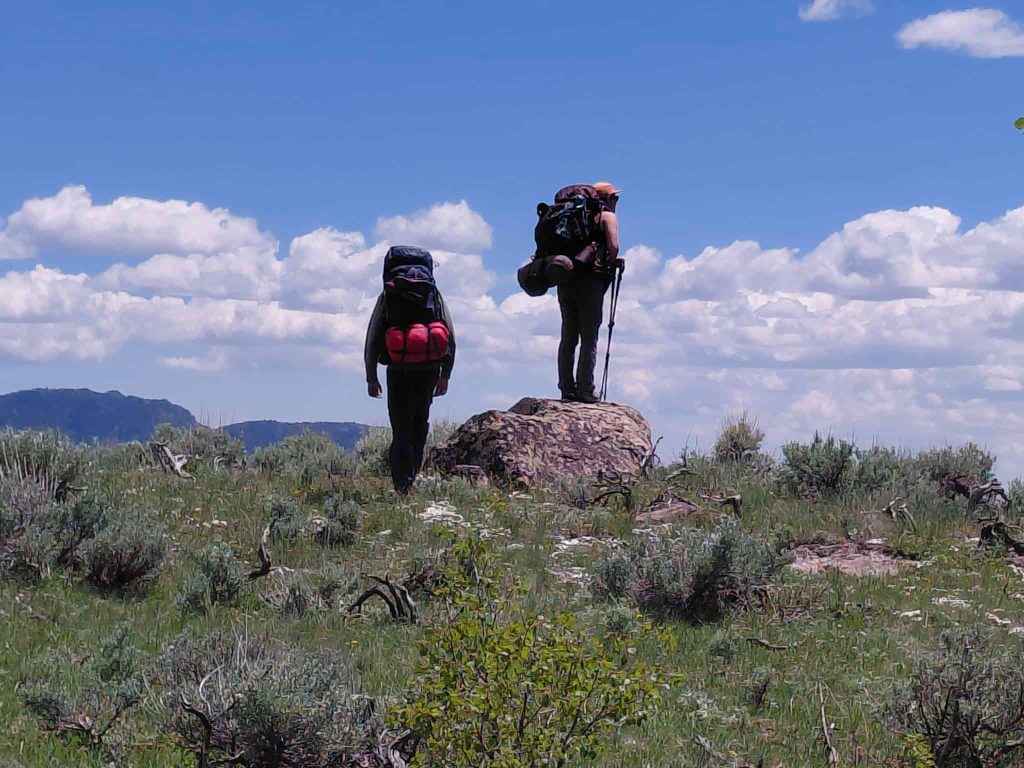
RCF team hiking to conduct ground survey and observe loon behavior.
RCF technicians taking preliminary look at a possible lake territory.
Common Wind River Range lake habitat.
Trumpeter Swan Cygnets Released in Yellowstone National Park
BILLINGS, Mont. (AP) — Yellowstone National Park may be well-known for its role in rebuilding populations of large mammals like grizzly bears, wolves and bison, yet trumpeter swans have a similar story of dogged recovery that is not as well known.
Curlew Collaboration: Working with our Neighbors to Track North America’s Largest Shorebird
Earlier this summer, the RCF crew teamed up with biologists Jay & Heidi Carlisle from Boise State University’s Intermountain Bird Observatory (IBO) to attach satellite transmitters to Long-Billed Curlews on and around Jackson Fork Ranch in Bondurant, WY.
Long-Billed Curlews are North America’s largest shorebird, breeding throughout the central and western United States and western Canada. Curlews nest in grassland areas, with dry rangeland and wet farm fields or pastures [1]. The conversion of nesting habitat to agricultural land and illegal shooting are critical and ongoing threats faced by curlews [2].
We worked with Jay & Heidi to identify the locations of nesting curlew pairs on the ranch. Their brown and tan feathers make curlews masters of camouflage, so our best chance of finding nesting pairs was in the early morning and late afternoon when the curlew parents would switch nest attendance roles, as this species shares incubating duties. We captured incubating curlews on their nests using a mist net; a long, curtain-like, multi-paneled net made with fine thread. We strung an 18 m (60’) net between two poles and slowly lowered it onto the incubating bird. Once removed from the net, Jay and Heidi banded, measured, and weighed the curlew before fitting it with a transmitter that tracks its movements using the ARGOS satellite system. The harness was adjusted carefully to fit the individual curlew before securing the transmitter and releasing the bird.
The goal of attaching these transmitters is to expand the current understanding of daily movements, migration routes, and stopover sites of curlews. These data will contribute to a growing dataset that researchers and biologists use to inform the public and guide conservation and management practices. To find out more about the birds we captured and other curlews that have been fitted with transmitters, visit the IBO website. Also keep an eye out for a follow-up blog highlighting the movements, migration, and wintering areas of the four curlews that were fitted with transmitters at Jackson Fork Ranch!
RCF crew member and IBO Biologist Jay Carlisle carrying a mist net as they get ready to lower it onto a curlew nest. Capture requires a lot of patience to find the nest, but the event itself is quick!
A Long-Billed Curlew nest is well hidden within the grass.
Finding a curlew nest requires that you find the curlew first, which is no easy task. Can you spot the female curlew sitting on her nest in this photo?
IBO biologists make the final adjustments to a backpack transmitter. Before doing so, they collect bill, wing, and leg measurements as well as the bird’s weight.
Once the transmitter has been fitted, the curlew is all set to be released. This device will transmit data on the bird’s location for up to two years!