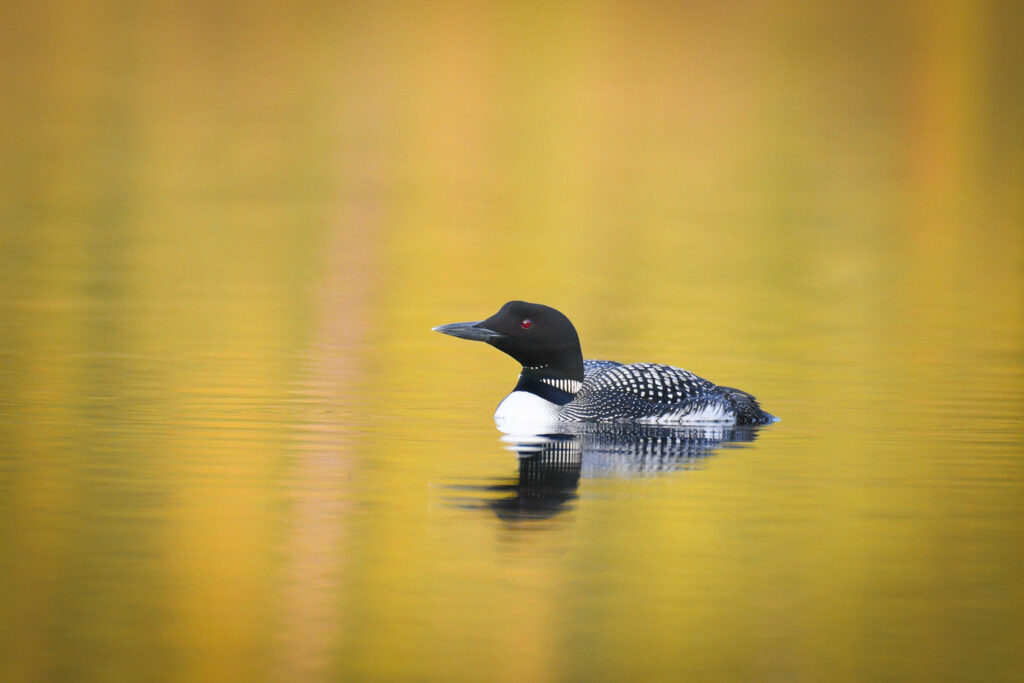
Summer is a busy time of year for Ricketts Conservation Foundation biologists. One of the many projects that they work on is monitoring Common Loons (Gavia immer) in Yellowstone National Park and the Bridger-Teton National Forest. The Common Loons within the Yellowstone Ecosystem are a distinct population, isolated from the rest of the Common Loons found across North America (Figure 1).
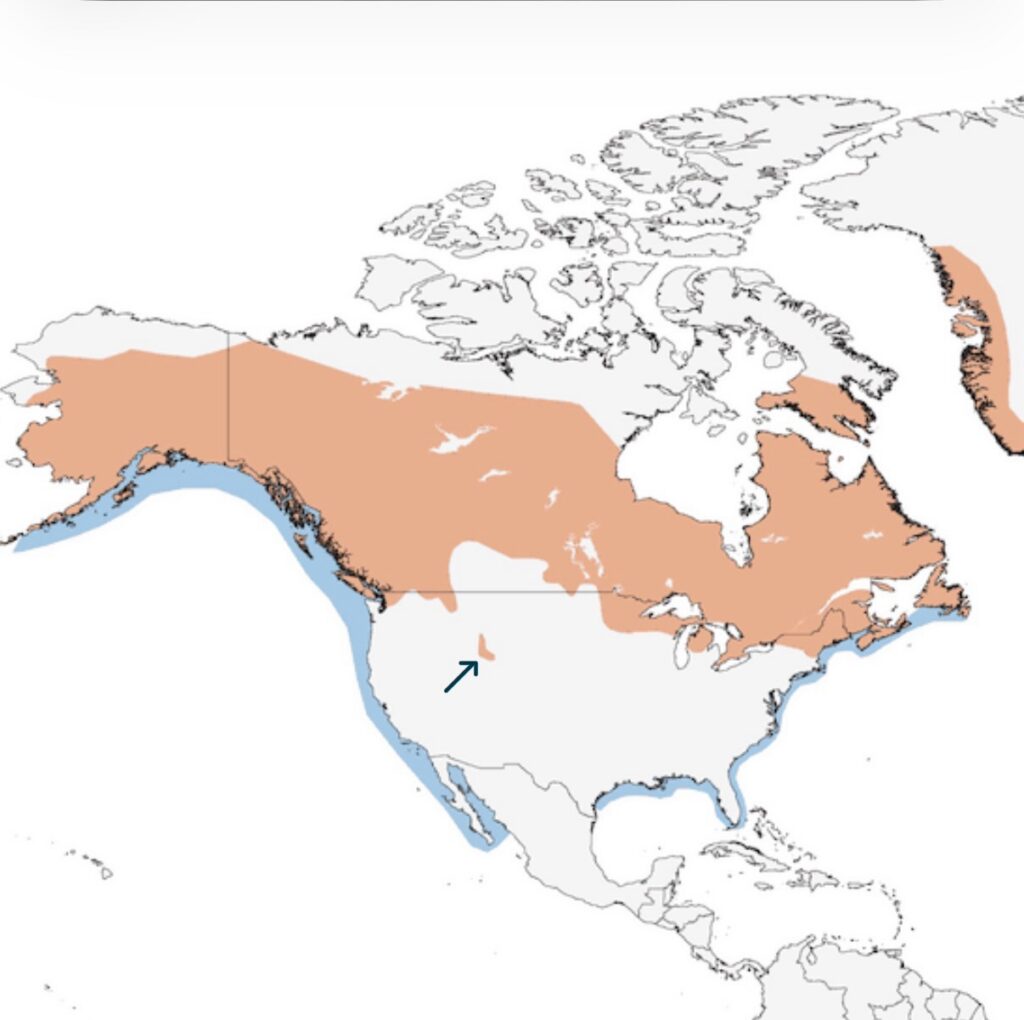
When a population becomes isolated, differences begin to arise over time. For the loons of Yellowstone, they have adapted to a high-elevation, montane lake lifestyle. This means that they’re smaller than loons from other parts of the continent (3.9 kg or 8.6 lbs average weight in Yellowstone vs 4.5 or 10.5 lbs elsewhere), as they need to be able to take off from small lakes at high elevations. Their smaller sizer also means that they don’t require as many food resources to survive and raise their young as do loons that live at lower elevations. Thus, they can breed on smaller lakes than elsewhere in their range, some of the breeding lakes in Yellowstone are less than 25 acres in size. This difference also shows up in their genetics. Although the closest population of Common Loons is found in Montana, Yellowstone loons are more closely related to birds in Saskatchewan than to the Montana birds. This suggests that they’ve formed a separate subpopulation for a long time.
Our work with Common Loons includes monitoring every known pair of breeding Common Loons within Yellowstone National Park and the Bridger-Teton National Forest, of which there are more than 15. Due to the rugged, remote nature of many of the lakes that our loons nest on, we are unable to efficiently monitor these birds on foot. Instead, we’ve opted to track them by air!
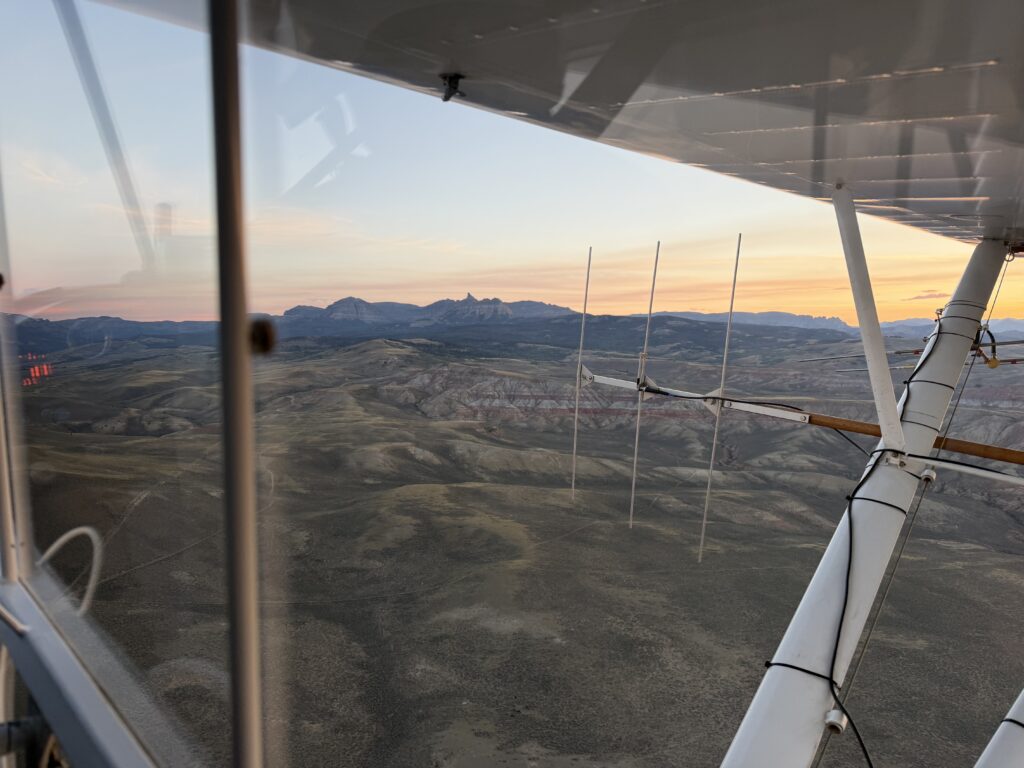
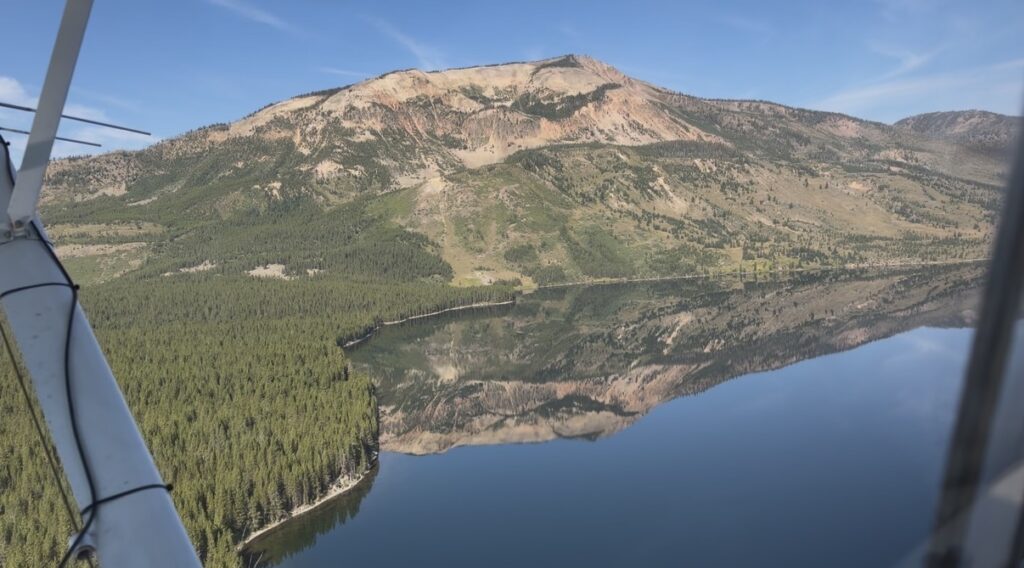
We conduct 4 aerial surveys per year to track loon occupancy, breeding attempts, and nesting success on these remote lakes. The flights take off from Dubois, WY before heading North past the Absaroka Mountains (Figure 2) and into Yellowstone National Park (Figure 3). Our aerial surveys allow us to monitor 40-50 lakes in a single day, making it a highly efficient method of data collection. Data we gather from these flights allow us to gain an understanding of where the loons are nesting and helps to inform RCF biologists about survivorship and reproductive success. Further, if something unexpected is spotted on a flight, biologists can then hike in on foot to investigate any notable findings from the flight.
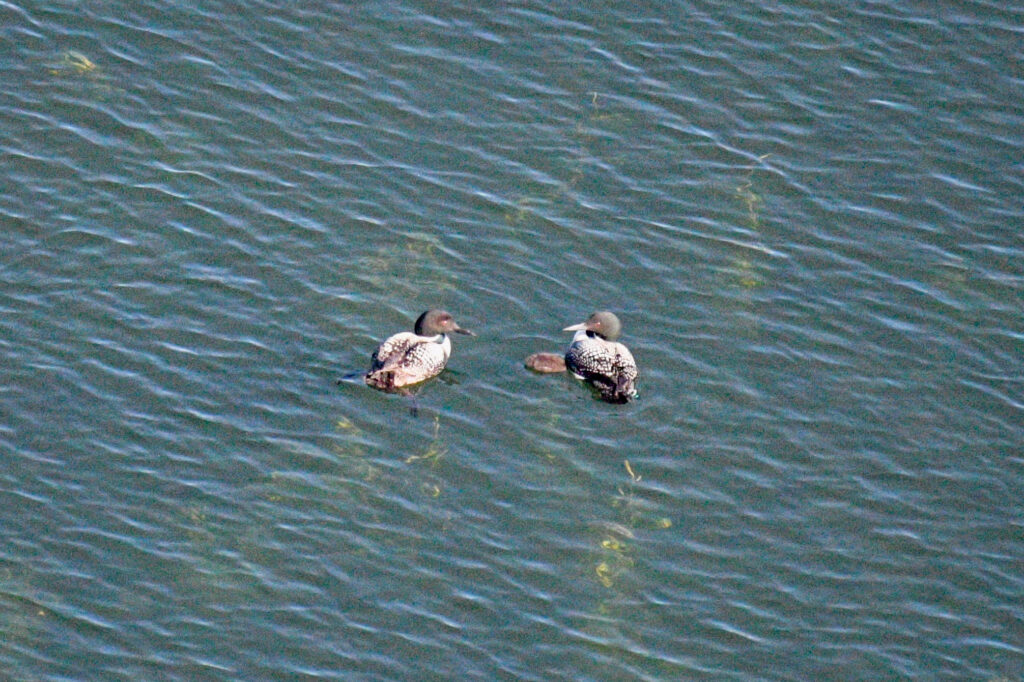
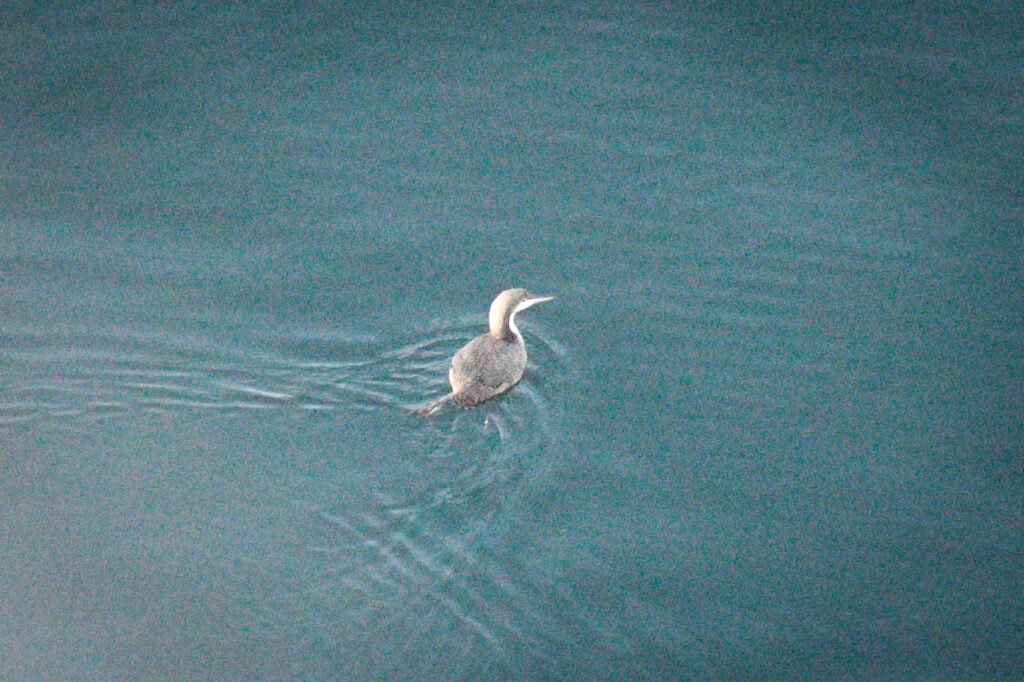
Spotting loons from the air is no easy feat, it takes a skilled eye and careful concentration to discern them from the many other waterfowl Yellowstone is home to. During aerial surveys RCF biologists often locate 30-40 Loons (Figure 4), hundreds of other waterfowl, and see lots of wildlife, such as bears, wolves, moose, and elk. RCF even spotted a Pacific Loon on their latest survey (Figure 5), a vagrant bird over 1,000 miles away from the closest known breeding population! All of this data is scientifically valuable and helps us guide regional wildlife policy within Yellowstone and Bridger-Teton National Forest. This year we observed 10 chicks and 13 pairs of Loons within our survey area. This is an encouraging sign, as loons often have a low productivity rate. At close to 0.7 chicks per breeding pair, 2026 was a good year for the rarest breeding bird species in Wyoming.