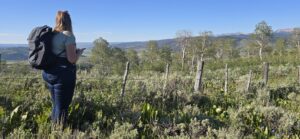
Fall in western Wyoming brings vibrant yellow hues, crisp nights, and shorter days. For many birds, these seasonal changes also signal that it is time to move. While it’s easy to notice the increasing numbers of warblers and sparrows making their way south, owl migration is largely invisible to us. On quiet September nights, these birds move across the landscape when most people are asleep. To better understand how owls use the southern Yellowstone Ecosystem during fall migration, RCF biologists monitor forest owl movements from early September to mid-November.
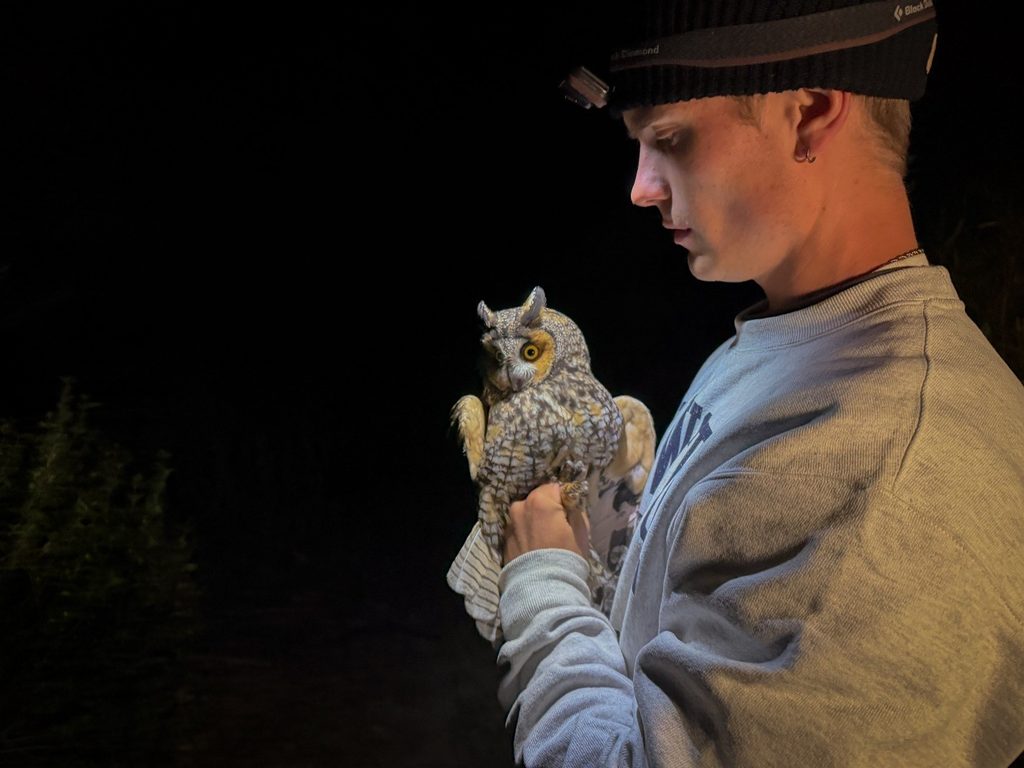
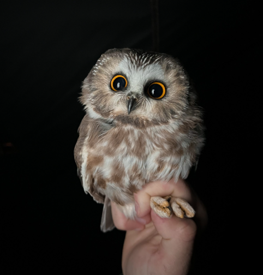
RCF’s fall owl monitoring program targets three species: Northern Saw-whet Owls (Aegolius acadicus), Boreal Owls (Aegolius funereus), and Long-eared Owls (Asio otus) (Figure 1). All three species use forested habitats and can be particularly difficult to study outside of the migration period. Northern Saw-whet Owl migration is relatively well studied in eastern North America, where a large network of owl-banding stations has operated for decades. By sharing capture and recapture information, these stations have helped researchers identify migration timing and movement patterns across that region. In the Intermountain West however, banding stations are much more widely separated, and owl movements remain comparatively poorly understood.
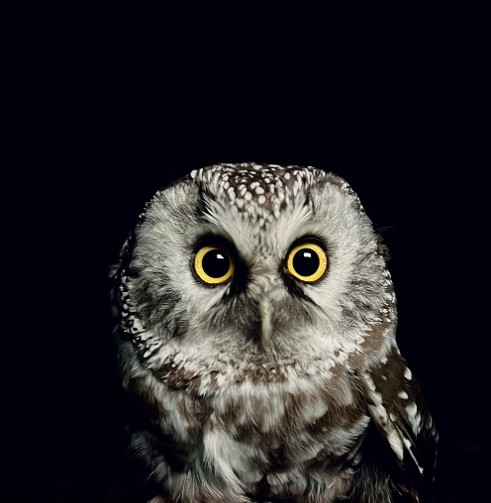
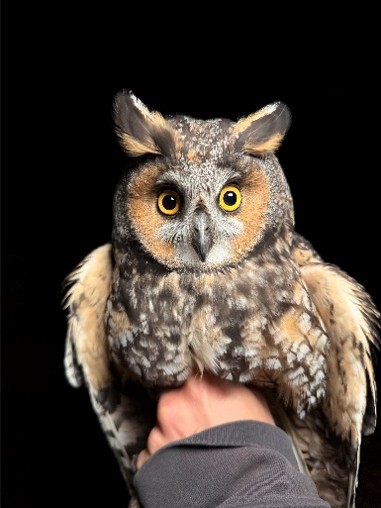
Each owl species moves through the region at different times. We typically encounter Long-eared Owls in September, with captures tapering off in October. Northern Saw-whet Owl numbers increase through September before declining later in the fall. Boreal Owls generally appear later in the season and are the least predictable. Unlike more regular migrants, Boreal Owls can exhibit irregular or nomadic movements that vary considerably between years, leaving much about their movement patterns in North America unknown.
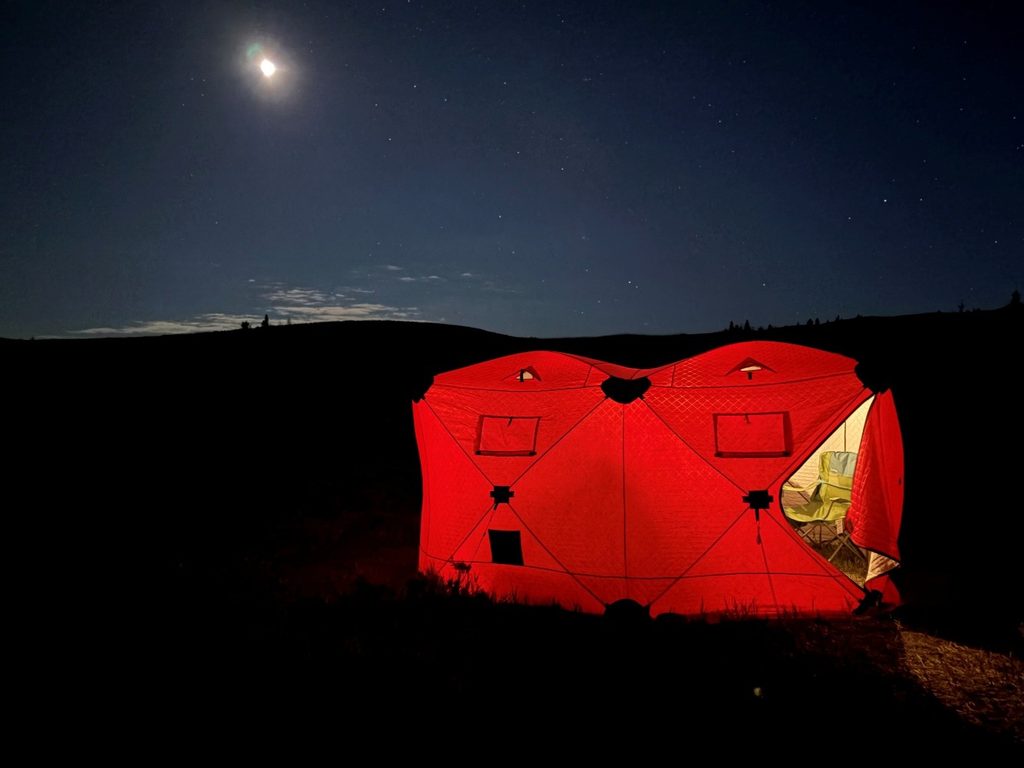
Fall migration provides RCF biologists with a unique opportunity to study these otherwise elusive birds. Migrating owls can be attracted to net arrays using audio playbacks that broadcast the calls of each target species (Click on link below to hear a Northern Saw-Whet Owl calling). RCF biologists operate these stations for six hours each night, beginning shortly after sunset. Nets are checked regularly, with captured owls removed carefully and brought to the banding station for processing.
https://www.allaboutbirds.org/guide/Northern_Saw-whet_Owl/sounds
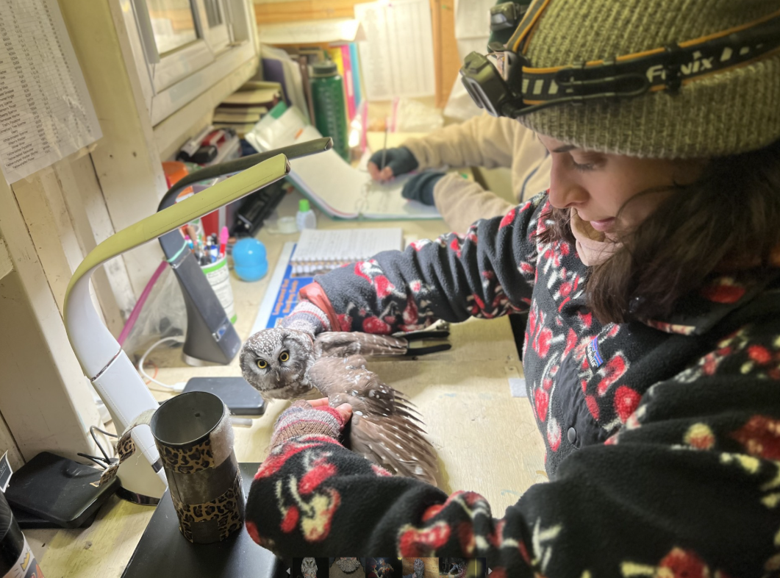
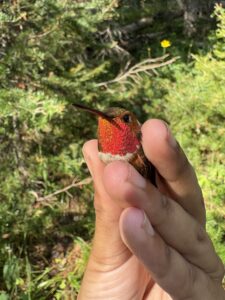
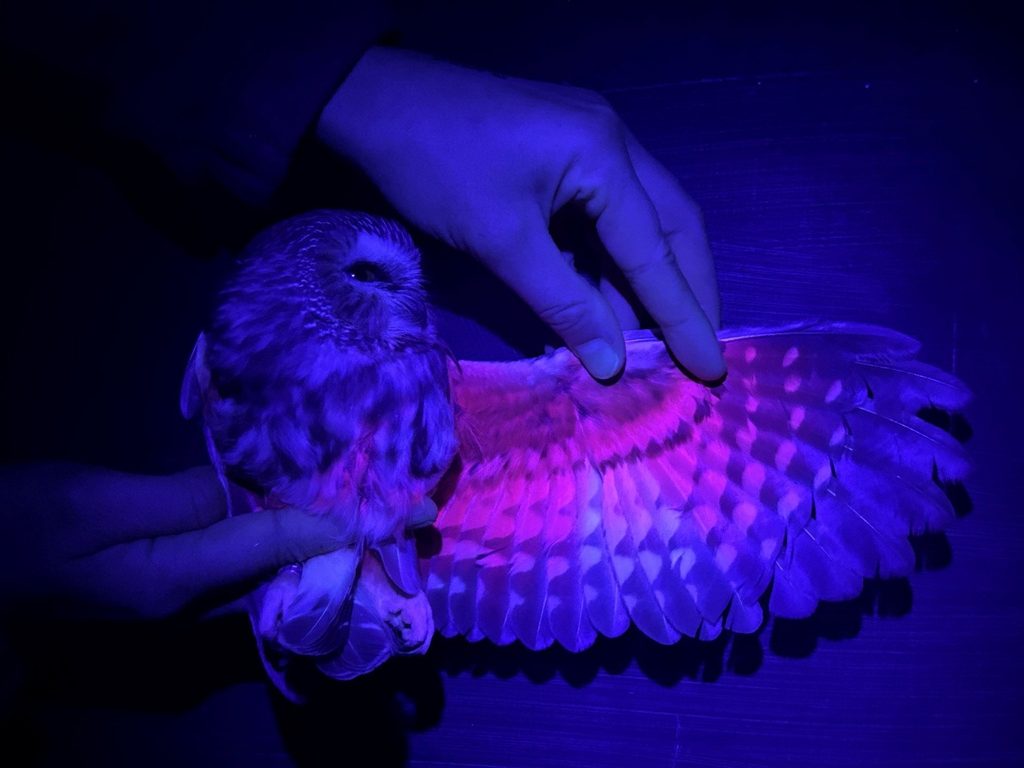
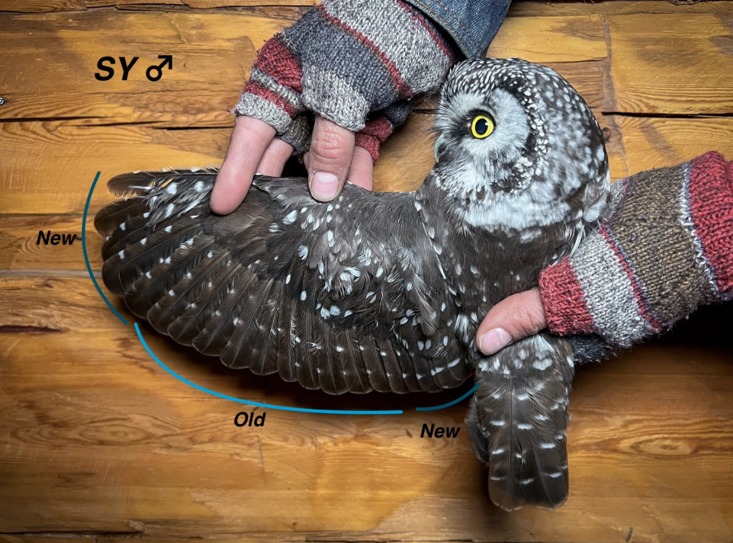
Each captured owl receives a uniquely numbered U.S. Geological Survey band and is weighed and measured before being released. Biologists measure wing chord and body mass, while plumage characteristics (Figure 2) and molt patterns (Figure 3) are used to determine sex and age, when possible. These data allow RCF to record the age and sex composition of migrating owls and see how migration timing varies among species and years. The band also allows an individual to be identified if it is captured again. An owl banded by RCF and later encountered at another station, or a previously banded owl captured by RCF, provides a direct connection between two locations. These encounters are particularly valuable for understanding owl migration, because their nocturnal movements are difficult to observe directly. Over time, banding and recapture data from stations across North America can help identify migration routes and provide a better understanding of how owls move through the landscape.
On particularly busy nights, RCF biologists may capture more than 25 Northern Saw-whet Owls, by far the most abundant owl encountered during our fall banding efforts. Catching a single Long-eared or Boreal Owl, however, can be just as exciting. Both are encountered less frequently at our stations, making every capture an important addition to what we know about their movements through western Wyoming.
Understanding how these owls use the Yellowstone Ecosystem during fall is one of the major questions RCF hopes to address through long-term monitoring. By operating banding stations consistently across multiple years, we can establish baseline information about the number, timing, age, and sex of owls moving through the southern Yellowstone Ecosystem. These data can then contribute to the large network of owl migration research across North America and help fill an important geographic gap in our understanding of western owl movements.
Over the course of RCF’s fall banding efforts, biologists have captured 1,237 owls since 2021. As of September 24, 2026, another 142 owls have been captured this season. Each bird provides another small piece of a much larger puzzle—and continues to help us better understand how these secretive forest owls move through western Wyoming.