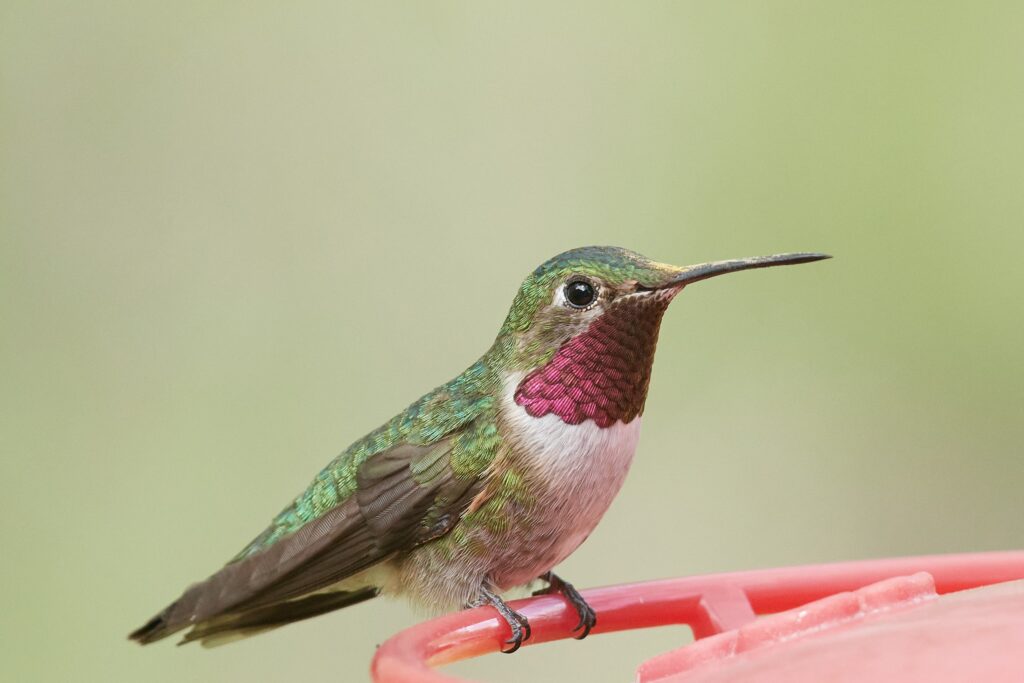
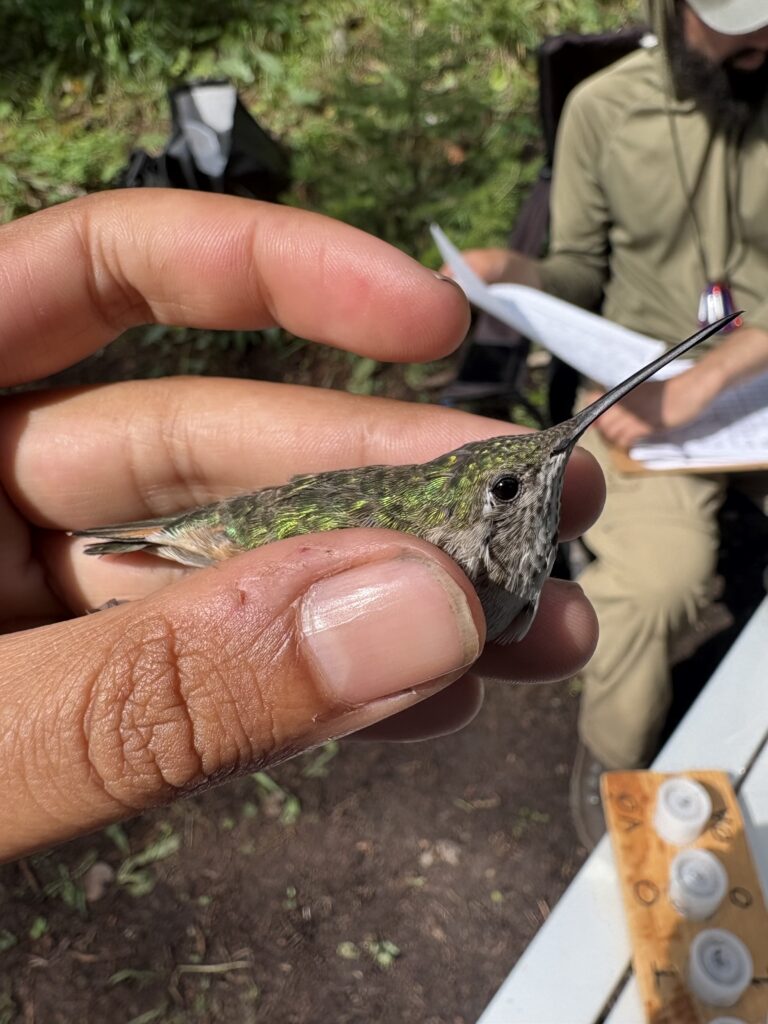
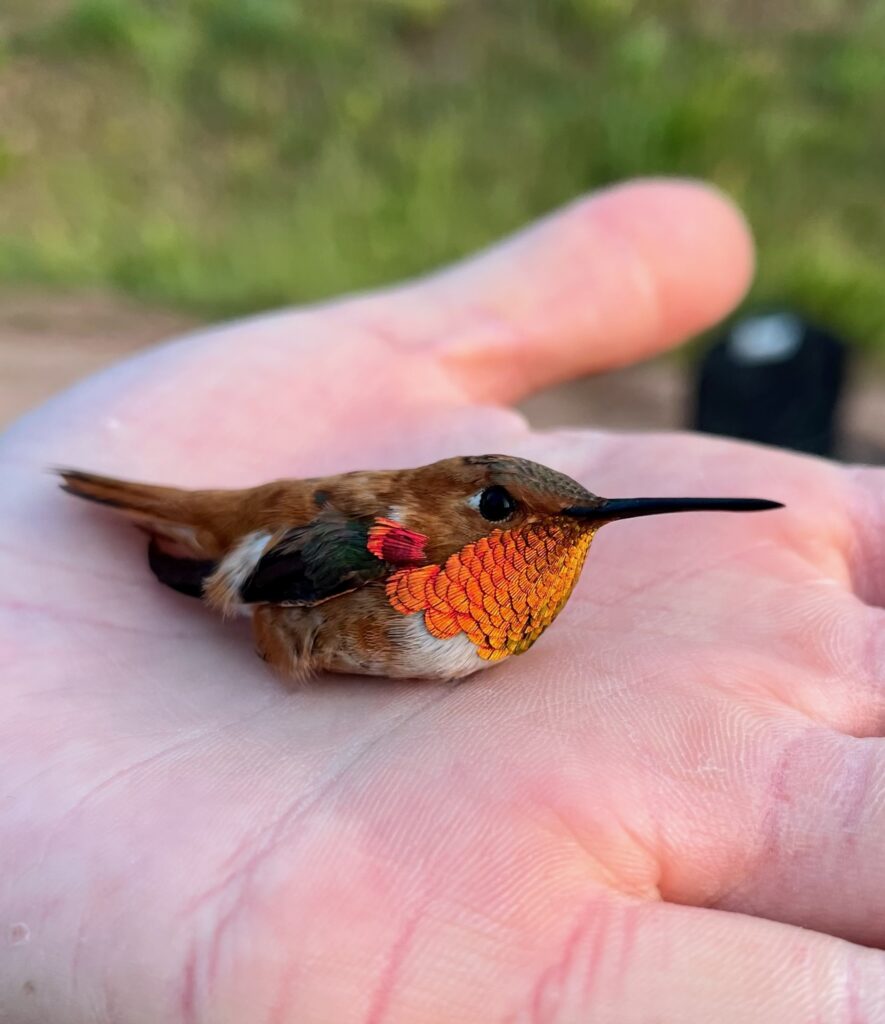
For a couple of weeks in July, the wildflower meadows of Monument Ridge come alive with a gentle whirring sound—that of the wings of hundreds of hummingbirds. Among them are the Calliope Hummingbird, the smallest migratory bird in the world, and the Rufous Hummingbird, which completes the longest migration of any bird proportional to their body size. These extraordinary species rely on montane meadows across the interior west to fuel their fall migration southward.
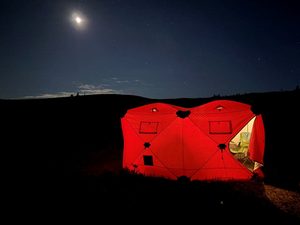
As part of Ricketts Conservation Foundation’s work to understand how regeneration following fire affects birds, we’ve observed high numbers of hummingbirds in recently burned sites. There, they take advantage of abundant wildflower growth in the years after a wild or prescribed fire. These tiny birds are often captured in the mist nets we use to study songbirds in the burn. During 2024, the inaugural year of banding at a couple of wildfire sites, we captured up to 120 hummingbirds in one day!
Because of their size, banding hummingbirds requires specialized training, tools, and permits. Unlike songbird bands, which come ready to use, hummingbird bands come as a flat sheet of lightweight metal which must be cut and shaped to fit. Hummingbirds also require different handling techniques and data collection than songbirds. Luckily, RCF banders were able to collaborate with an expert hummingbird researcher, Kyle Shepard, to receive the training needed to band hummingbirds.
In 2025 and 2026, we’ve captured fewer hummingbirds than in 2024–likely correlating with a reduced wildflower bloom due to drought or other changing conditions. As RCF continues to band hummingbirds several years into the future, this data will become a valuable aspect of understanding how wildlife responds to fire.